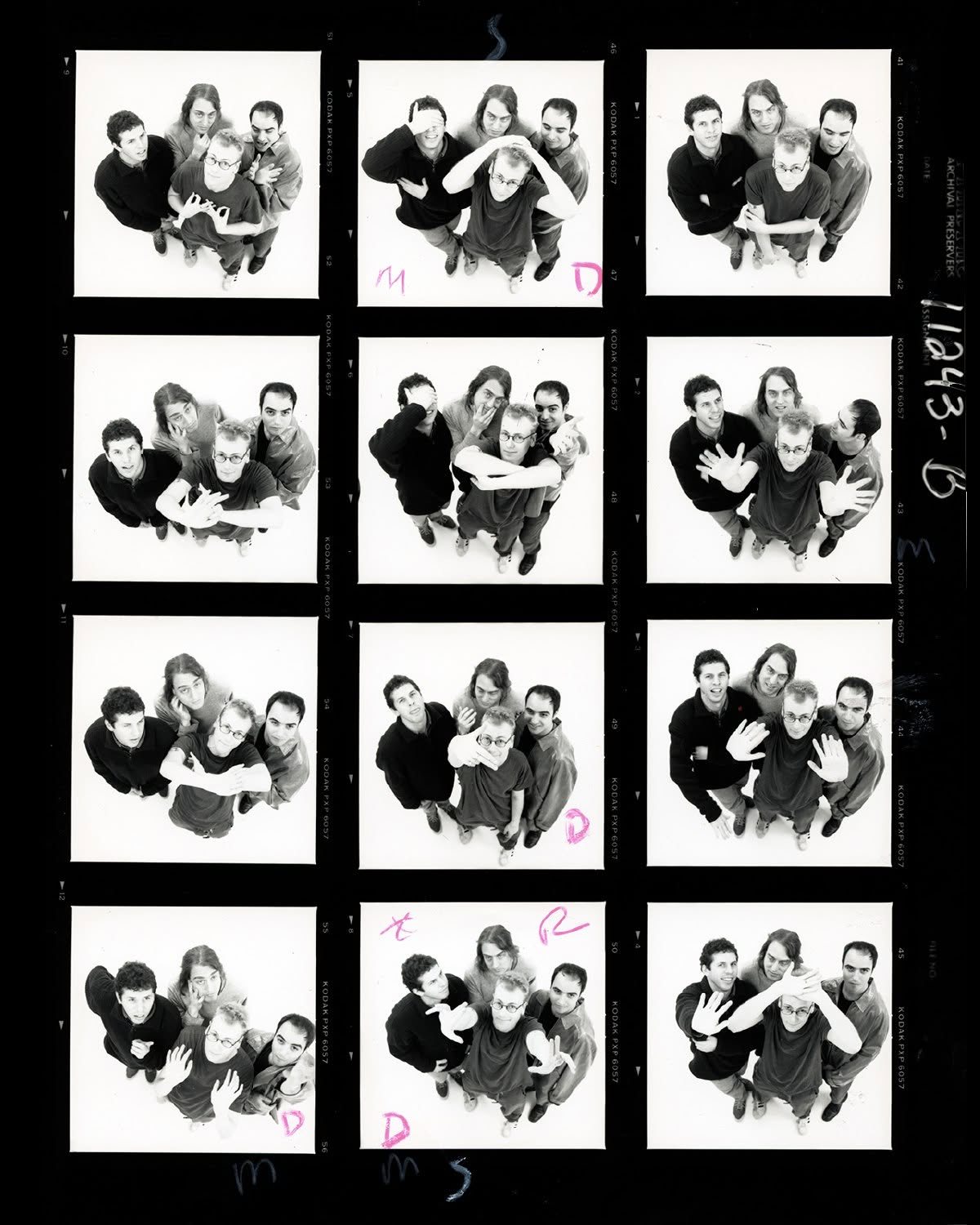
Soul Coughing became a touring band almost overnight. Gabay told the Houston Press in 1996 that until Ruby Vroom came out they had only ever played New York; within two years they were working rooms of 200, European festivals and 10,000-seat halls.1
Because Ruby Vroom sounded so studio-built, some critics assumed the band was a production project that couldn't play live. The Houston Press reported in 1996 that about 95 percent of it had in fact been cut live, all four playing at once, vocals included, and that Irresistible Bliss was made the same way.1
Who They Toured With
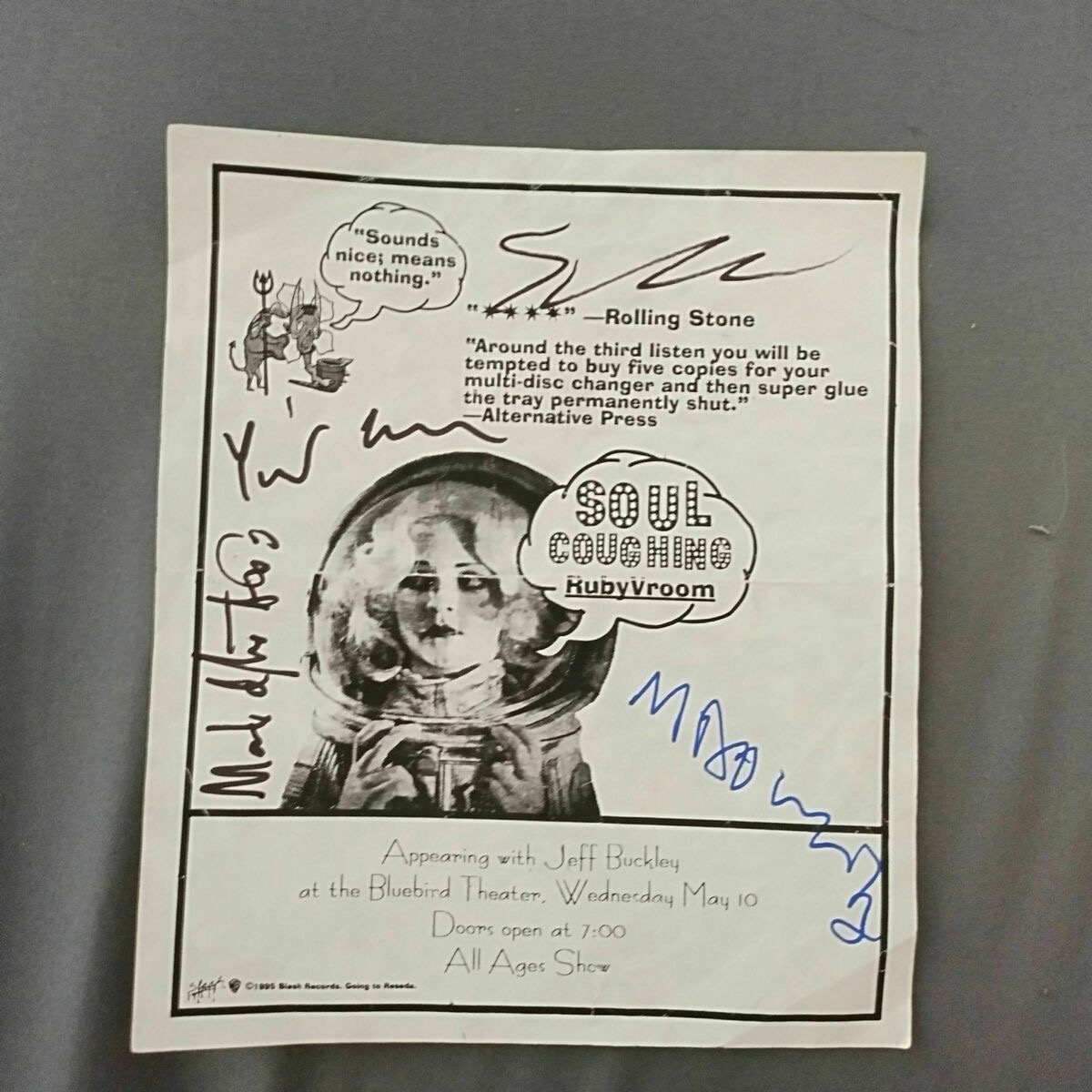
The El Oso press bio describes these years as backbreaking support tours with Jeff Buckley, Sunny Day Real Estate and Cop Shoot Cop. Other support slots included They Might Be Giants, Shudder to Think, Poster Children, Trans Am, Everclear, Geggy Tah, Los Amigos Invisibles, DJ Spooky and Lake Trout,2 and Contemporary Musicians adds Girls Against Boys. The Dave Matthews Band was the biggest booster: Matthews took them out on two US tours, including Madison Square Garden, and the bands shared European festival bills with the Violent Femmes. Doughty later called Matthews a longtime friend, and the connection eventually landed him on Matthews's ATO label.34
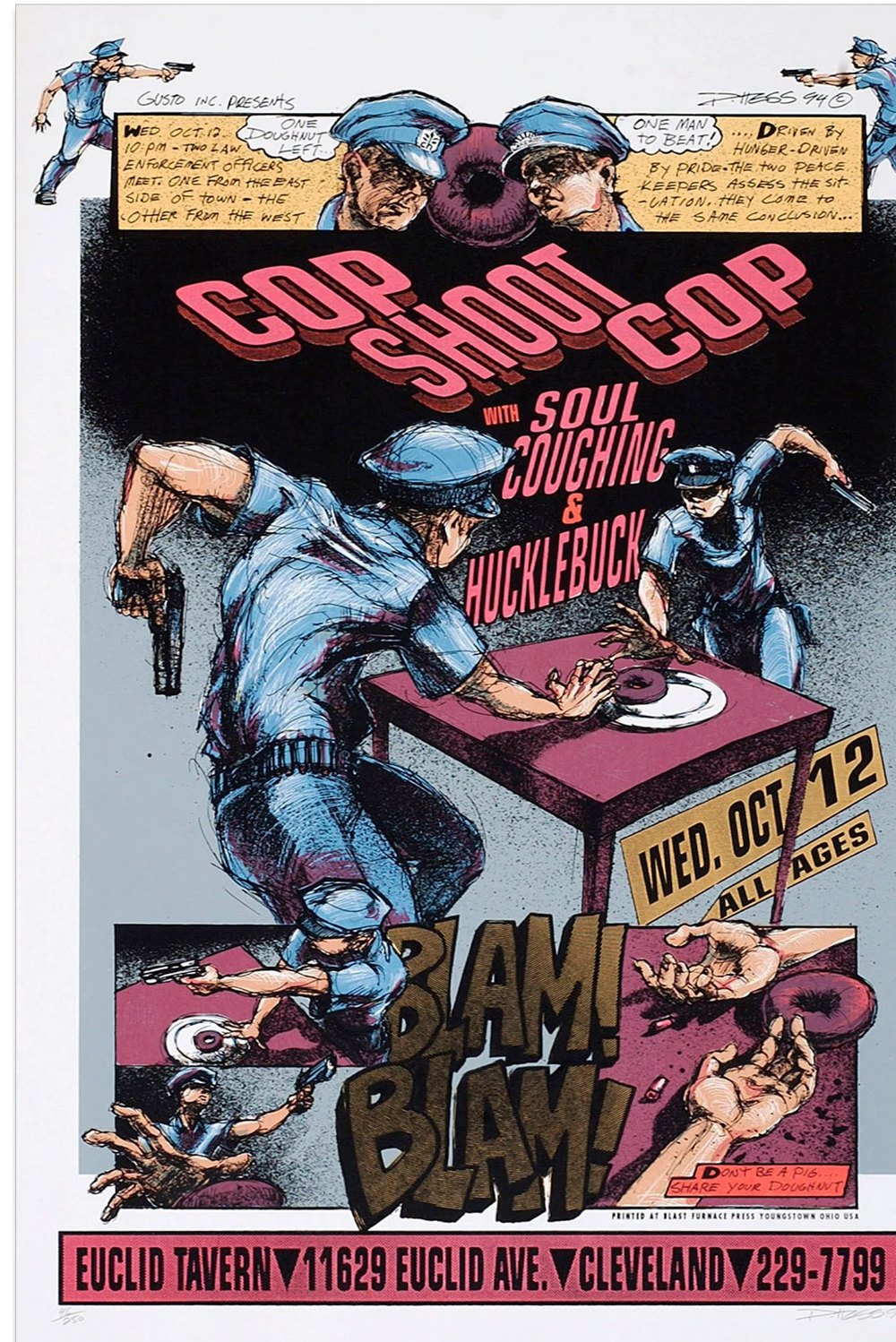
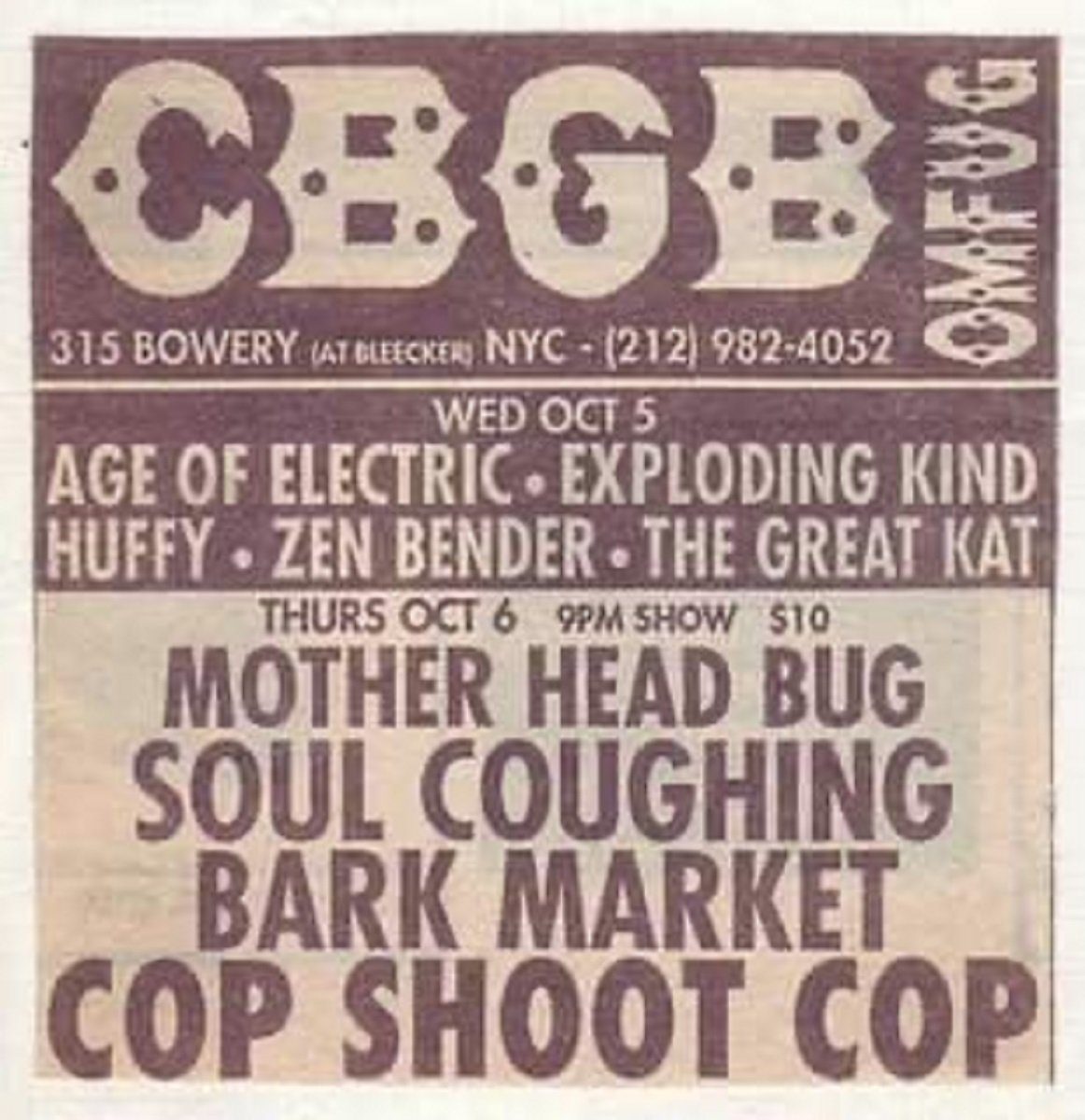
The band's first tour was opening for Cop Shoot Cop, whose singer Tod A. Doughty still called his personal hero in 1996, and the album credits thank them. By September 1995 they had already been to Europe four times that year, and the fall 1996 European run took in western France, Spain and Portugal. That fall's US tour featured Jeremy Enigk, formerly of Sunny Day Real Estate, with his orchestra. At Lollapalooza in 1996 their second-stage slot overlapped Rage Against the Machine, and Steinberg's verdict, relayed by Doughty, was that the revolution was cool but hard to play during. Steinberg thought it was funny that the Dave Matthews Band, "really sweet people," had become fans of a group whose first tour was opening for an industrial two-bass noise band from Brooklyn. Cop Shoot Cop's crowds turned out to be open-minded, he said, and every so often someone would sidle up at a show and mention, with a sly look, that they had been at one of those dates.5
Doughty's 1994 Tour Dispatches
In fall 1994 Doughty wrote a weekly tour diary for fans online, with degli Antoni supplying a downloadable sample to go with each one. Dispatch #1 (November 17, 1994, written in the van just past Katy, Texas) opens about a week into a run with Sunny Day Real Estate and Shudder to Think that curled through the South toward Austin, Los Angeles, San Francisco and Seattle. Doughty described the shows settling into a loose, roomy groove he credited to Southern humidity, and the sets were full of unrecorded songs: "Woolly Imbibe," a new one called "I Got Lost in the Parking Lot" (later known as "Don't Go Wreck the Car"; an archived soundboard from Boulder's Fox Theatre on November 13, 1996 lists it under both titles), and "Henry Rollins Has a Very Large Neck Indeed," played on a closed-circuit university cable channel in Atlanta. "White Girl" was new and played nightly; its bassline was something Steinberg had improvised during a video shoot a couple of months earlier while someone was powdering his face. This is also where the set-list bears first show up in print.6
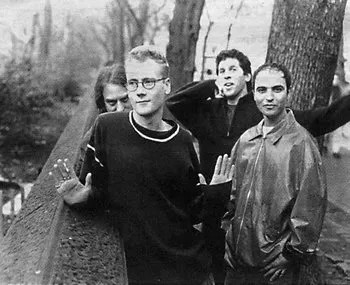
The rest is van life. Tour manager Gus Brandt had been rechristened Roy, soundman Larry "Lars" Smith was the band's designated King of the Eighties, degli Antoni had been nicknamed "the Horsey," and Gabay was practicing a Texas accent that came out sounding like Boris Badenov. Steinberg and Gabay vanished to payphones at every stop. The van stereo ran on Cibo Matto, George Jones, the Latin Playboys, Exile on Main St., Prince's Come and degli Antoni's tape of the Hi-Lo's. Two years on, the tour bus had no CD player at all. Steinberg was the only one who'd brought cassettes, and his were too weird for anyone else, so old George Jones still got the most play ("George Jones is the soul singer," Steinberg said), and they blasted Back in Black every time they drove into or out of Detroit.5 A few months later Doughty assigned everyone a dwarf name: Grumpy for Steinberg, Horsey for degli Antoni, Spacey for himself, and for Gabay just Yuval, since you don't get much more dwarfish than that.7
Dispatch #2 (November 25, 1994, from a Days Inn in Portland) covers the drive west. At Emo's in Austin, Gabay sprained his ankle leaping offstage, which took "Mr. Bitterness" out of the set for a few nights. In Bryan, Texas, playing an old opera house to a room with plenty of cowboy hats, the band deliberately opened with a brand-new song, "Paint," later on Irresistible Bliss, and the crowd went with it anyway. After an eleven-hour desert drive and a locked club in Tucson, the show at the Downtown Performance Center (a DIY co-op that posted a sign asking the crowd not to dance, for insurance reasons) turned into Doughty's favorite of the tour. Sunny Day left the tour before California. In Los Angeles the band played two sets of mostly new material at a pajama party at A&R man Randy Kaye's house, including a live "Down to This" built only from its chants. San Francisco was degli Antoni's hometown, and the crowd was full of relatives. The dispatch also confirms the FAQ's rumor about soundman Lars Smith, who entertained Doughty in El Paso with stories of touring with Kix, the Maryland glam band, a natural connection for a Baltimore soundman.6
Dispatch #3 (posted December 21, 1994) picks the story up at the end of that run, after earlier dates with Cop Shoot Cop through Buffalo and Detroit. Sunny Day's Jeremy Enigk asked them to play "Sugar Free Jazz" at soundcheck. In Seattle the band did an on-air session at KCMU, where degli Antoni walked listeners through the samples in "Sugar Free Jazz," pointing out the Hong Kong street sounds and the escalator at Macy's. Doughty noted that some people heard them as a hip-hop band and others as a rock band, while the band didn't consider itself either.6
"Screenwriter's Blues" was getting real Seattle airplay, enough to sit at seven or eight on a commercial alternative countdown, and Doughty could tell which towns had heard the uncensored version by the crowd's reaction to its one profanity. When the DJ introduced them as a band from Los Angeles, Doughty had his friend stop the car, found a payphone and called the request line to correct him. The next day the band flew from Sea-Tac over the North Pole to London for their first European dates, and Doughty wrote that standing around the airport it was dawning on them that the band was turning into a kind of family.
Dispatch #4 (February 1995, written jet-lagged in Chicago) covers the turn of the year. A short East Coast run through Boston, D.C., New York and Philadelphia was the first time whole crowds knew the words; Doughty said it took him four songs to realize the hiss in his monitor was the audience singing. He named the moments that now set rooms off: the jazz section at the end of "Bus to Beelzebub," the switch from the freestyle into the fade of "True Dreams of Wichita," and the bass breaks in "Blueeyed Devil." Gus Brandt left for a stint tuning guitars for Belly in Australia (he was back as tour manager for the Irresistible Bliss run).6
Then came the first proper European tour, a much longer route than the gigography shows: Denmark (Copenhagen, Aarhus, where kids kept yelling for "Janine," which the band never played live because it would mean touring an answering machine, and a near-empty show in Sonderborg that became a loose, tangent-filled favorite), a sold-out night at the Loft in Berlin (about 800 people, who sat through it in near silence and then came up afterward to say it was brilliant; Doughty figured European crowds just run more sedate),8 Amsterdam, Antwerp, Paris with their French label Barclay, Zurich, and then Italy, where in Cesena a kid in the front row lip-synced "Blow My Only," learned from a widely traded bootleg of their Amsterdam radio session. In France, Doughty found journalists treated them as Important, quizzing him on references and on supposed links to Frank Zappa and Morphine; he said he'd never listened to Zappa. The van ran on Portishead's Dummy several times a day. New in the set were "Lemon Lime" and "I Got Lost in the Parking Lot," alongside unrecorded staples "Blow My Only," "Laff On, Fatboy," "Collapse, Unload It," "Woolly Imbibe" and "White Girl."
Le Monde covered the Paris date, Sunday, February 5, 1995, at the Érotika, a rock club in Pigalle. Stéphane Davet reported that the curious, intrigued by the band's recent triumph at the Transmusicales de Rennes, filled the room without trouble. He called the four "song sculptors" more than songwriters, praised Steinberg and Gabay's rhythm section for precision and intensity, and noted that Gabay saved his movements behind a minimal kit. Doughty's slight blond frame, he wrote, gave no warning of the stage presence he turned out to have.9
From Milan they flew straight to Minneapolis for an over-21 show the band hated on principle. Doughty opened with a speech against age restrictions, spent the set pulling crushed fans out from against the stage, and the crowd kept knocking over monitors and shoving degli Antoni's keyboard out from under him. Back in the US, the reception was suddenly that big.
The dispatches are personal as well as logistical. Doughty confirmed to fans in Dispatch #3 that his girlfriend was the poet Maggie Estep; they had started seeing each other while Soul Coughing toured with Cop Shoot Cop and she was on the road with her band opening for Hole, and Gus would drive him from Buffalo to Rochester to see her. She flew in to meet him in San Francisco in November 1994 and in Chicago in February 1995, and he closed Dispatch #4 recalling that the first thing she ever said to him was to ask whether he was the Soul Coughing guy. By the September 1995 SonicNet chat he said they had split that spring. He also used the dispatches to publish poems written in the van, "Butter/Lost" (somewhere between Fredericksburg and Chapel Hill) and "From a Gas Station Outside Providence."106
Other snapshots: Shudder to Think's stage manager, nicknamed Angry Dave, calmly stage-diving mid-set in Portland; Dave Grohl wandering backstage in Seattle, where Gus greeted him as "Nirvana Boy"; Sunny Day drummer William Goldsmith writing his address in Doughty's book with bloodied hands after the final night; a near-empty show in Sonderborg, Denmark, after which Doughty went to a karaoke bar with a local teenager and her mother while her weeping boyfriend trailed them through town until the police drove by; and Barclay's Stéphane Vérité taking the band to a Paris bar where a woman in a cowboy hat and holsters sold tequila shots with a war whoop. Doughty, who didn't drink, found that one especially funny.
On the road they were deep into unrecorded material. In September 1995 Doughty said they played maybe ten songs beyond Ruby Vroom regularly and another ten occasionally, and degli Antoni stressed that he changed his samples on the fly every night. They worked in covers too, including Black Sabbath's "War Pigs" and, debuted in fragments in Lyon in 1996, Tommy Tutone's "867-5309/Jenny." Early TV included a 1995 appearance on The Jon Stewart Show, which Doughty said left him so nervous he threw a tantrum, and the "Down to This" video drew a split decision on Beavis and Butt-Head: Beavis yes, Butt-Head no.
A Harvard Crimson review of the Paradise show on April 19, 1995 catches the set at that point: "Bus to Beelzebub" to open, about five new songs mixed in with the album, a bit of the Beatles' "A Day in the Life" on the end of "True Dreams of Wichita," a "War Pigs" tease inside the closing "Down to This," and "Screenwriter's Blues" for the encore. When somebody yelled for "Janine," Doughty answered, "Janine's not here right now." The reviewer was struck that the crowd actually danced.1112
Guests who sat in over the years included Dave Matthews, John Popper, Redman, clarinetist David Krakauer, John Zorn, Anthony Coleman, Elliott Smith, Casual and Priest.2
By spring 1995 the online routine had a Warner Bros. wrapper around it. On May 1, 1995 the band was the guest on Warner's weekly AOL chat, "Cyber-Talk," and hosted it from backstage at The Backdoor in San Diego before going on with Jeff Buckley. Warner's announcement noted that Doughty's tour diary was also posted on CompuServe and the Internet, that fans could download an interactive press kit, and that the band answered fan e-mail from the road.1314
The Crew
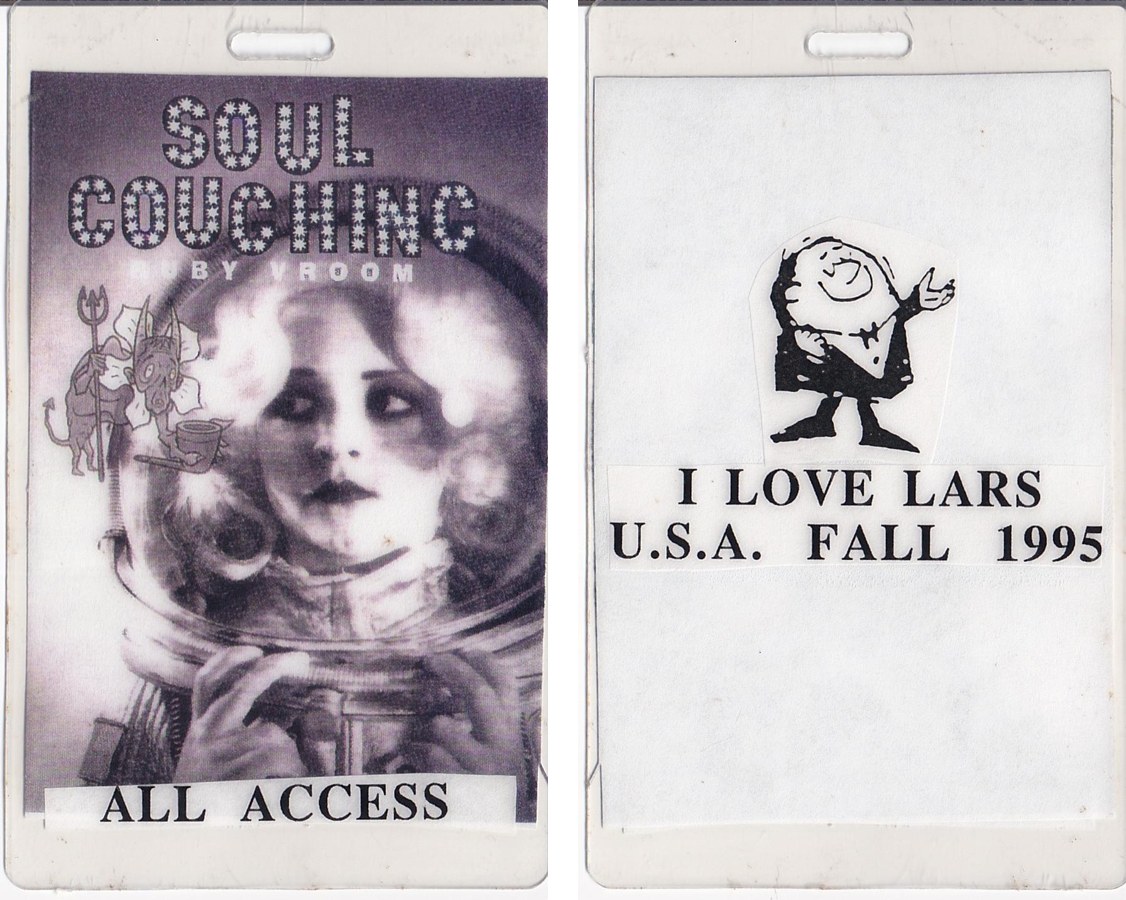
The crew became characters in their own right. Gus Brandt was tour manager for most of the Irresistible Bliss run and famously put Claire Danes on nearly every guest list. She never once showed up. An early video shows Steinberg's amp reading "Claire, call Gus," which tells you how that was going. Front-of-house was Larry "Lars" Smith, a soundman from Baltimore who ran the board until early 1999 and was not to be asked for a tape feed. "Gentleman" Jim Norton was guitar tech; a Seattle-based veteran who had previously teched for the Canadian punk band SNFU, he became the crew's resident storyteller and an opinionated authority on Doughty's guitar parts.
Norton also explained one of the band's private jokes for fans on the AOL board in December 1998. The number seven kept turning up among band members because of a prank-call tape Gus Brandt had found, which the crew called the Marky St. James tape: calls to musicians who had placed want ads in an L.A. music weekly. In one call, a caller flirts with a rock dude's mother while the rock dude is in the shower, and when she asks for his number he just says, "Seven." Brandt, Doughty and Norton recited the tape "with mind-numbing glee on tour practically every day." Steinberg's own answer, in a 1996 survey on the official site, was shorter: "7 is the number of foolishness." Norton signed off as "the former Employee #107."
The Bear Set Lists
Steinberg would sulk until someone drew a bear on his set list, so Doughty started drawing them, and tour manager Brandt took over the habit. Each bear was themed to the city, and Doughty listed favorites in a November 1994 note, including a champagne-glass-shaped weeping bear and a taco-shaped bear. Fans kept stealing the lists, which upset Steinberg. The bears eventually named the third album.
Tapers Welcome
The band was openly relaxed about audience taping and tape trading, at a time when many labels fought it. Fans had two rules:2 don't ask Lars for a line, and watch out for club bouncers who might not share the band's view. That policy is why so many 1990s shows survive today in fan and archive collections. Doughty's own favorite live tape, he said in 1995, was a Dutch national radio broadcast.7
Soundtracks and Side Doors
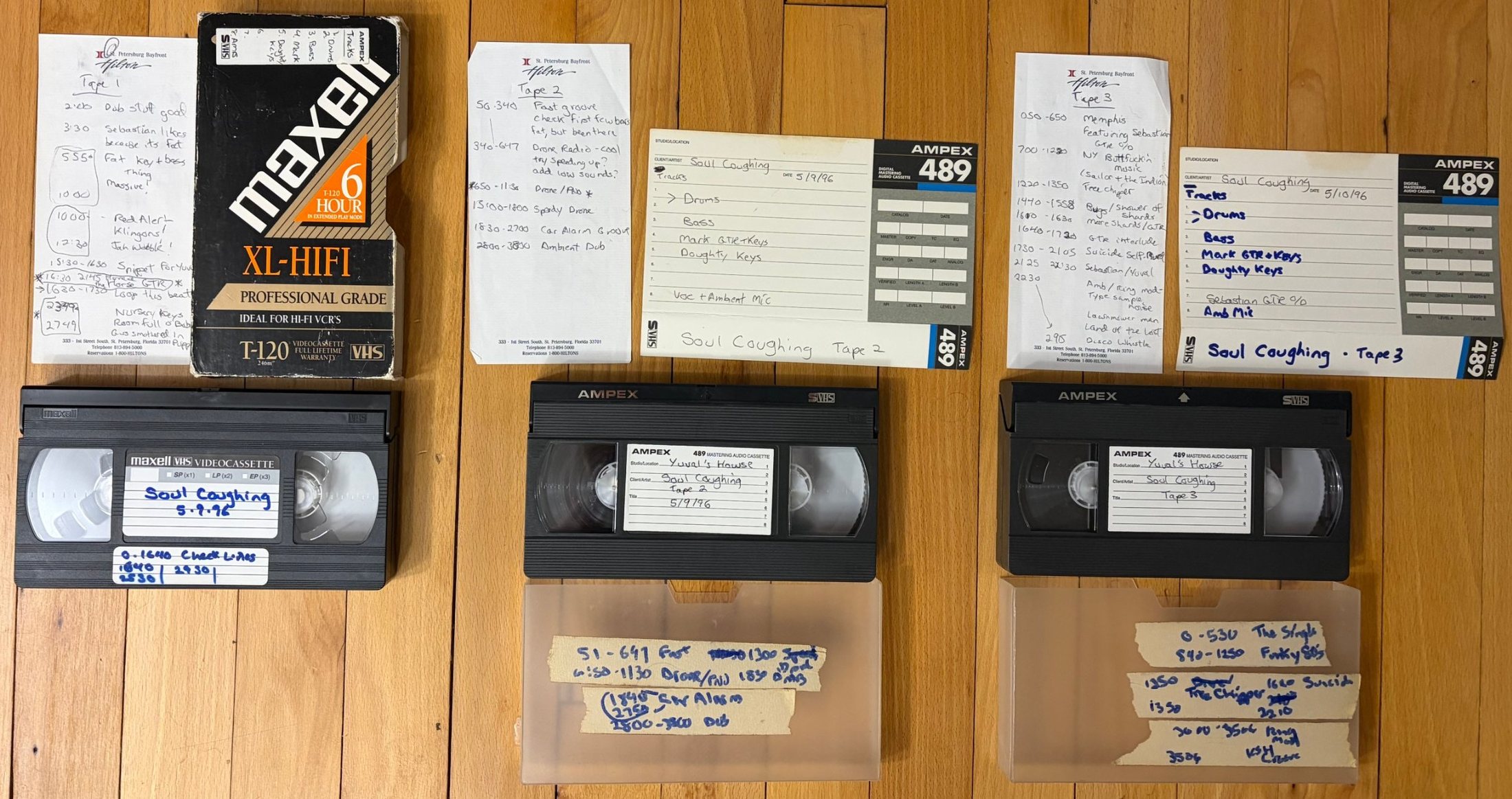
The band spent these years seeding songs into film and compilation releases, often written fast. Gabay said in 1996 that the soundtrack pieces were sometimes knocked out in a quarter of a rehearsal.
The band also made an interactive piece for Blender's CD-ROM in 1995. Shot in a Manhattan rehearsal studio, it let viewers click around the band, read a poem by Alan Dugan, and choose between clips of the "Down to This" and "Screenwriters Blues" videos, all with plenty of band sarcasm about CD-ROM owners.
- "Is Chicago, Is Not Chicago" in Tommy Boy (1995)
- A track for Wayne Wang's Blue in the Face soundtrack (1995, Luaka Bop)
- "Unmarked Helicopters" on Songs in the Key of X: Music from and Inspired by The X-Files (1996), produced by Steve Fisk; Contemporary Musicians says X-Files creator Chris Carter counted them among his favorites4
- Offbeat: A Red Hot Soundtrip, the Red Hot Organization's 1996 AIDS benefit
- An EP for John Flansburgh's subscription-only Hello CD of the Month Club (June 1996), including "Sack Full of Puppies" and "My Ass Is in the Bronx." A Spin ad that July sold the 1996 series at ten EPs for $47 and listed Soul Coughing alongside Gordon Gano, Will Rigby and John Linnell.1516
They were also early adopters online. Contemporary Musicians notes the band posted tour diaries on America Online as early as 1994 and printed their web and email addresses on their albums.4
Minneapolis
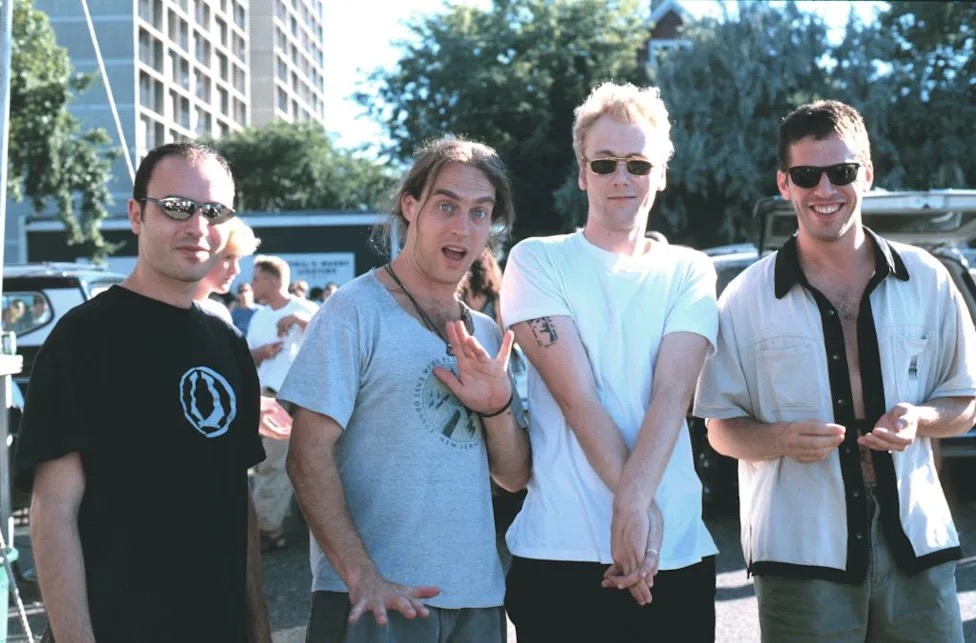
Thanks to heavy support from alternative station Rev 105, Minneapolis became the band's second home. The Star Tribune reported they regularly drew five to ten times the crowds there that they drew elsewhere, and First Avenue later gave them a star on its exterior wall, one of the city's top musical honors.17
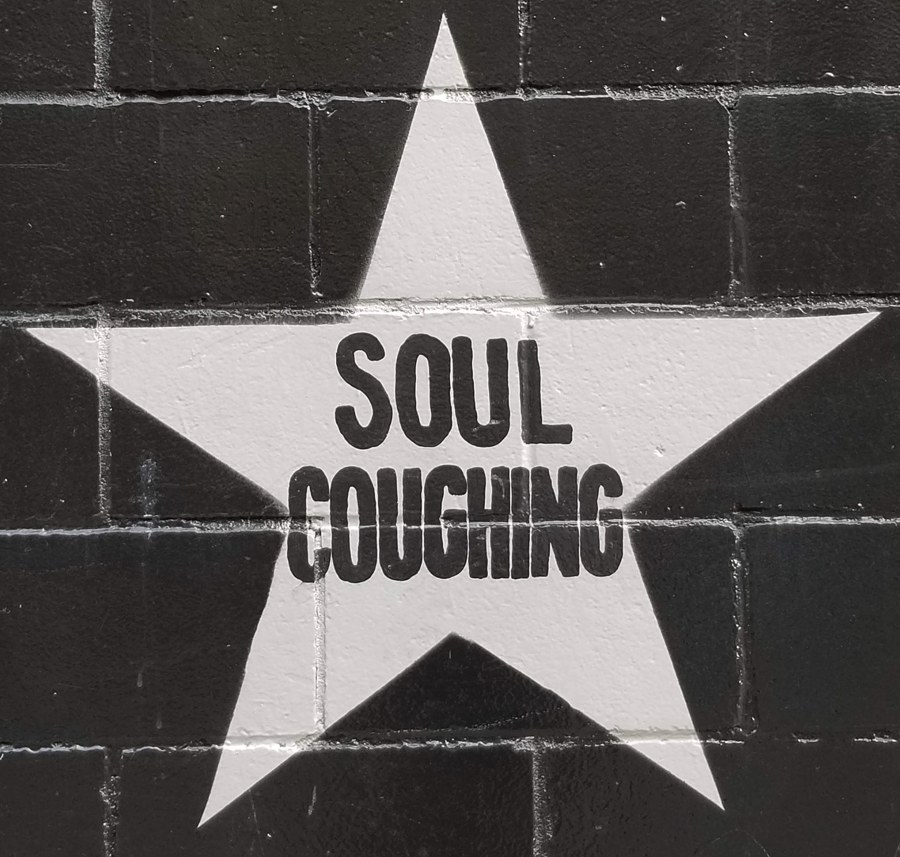
Fans on the newsgroup later traced that support to one person: Rev 105's program director, who had met Doughty at a New York poetry reading a year or two before Ruby Vroom and got the station playing "True Dreams of Wichita" early. The band repaid the loyalty. They dropped into the station for in-studio versions of "White Girl," "Lazybones" and "Down to This," headlined Rev's free Cedarfest street festival on August 20, 1995 over a bill that included G. Love and Special Sauce and Spearhead, and celebrated Irresistible Bliss with a free in-store at Let It Be Records on July 8, 1996, where the album went on sale at midnight after the set. Before a later Minneapolis show, Doughty told fans in the local paper to bring Rev 105 bumper stickers and slap them on a rival station's promo van; onstage, the call-and-response "peanut butter" chant turned into a chant of "Rev 105." When the station went off the air, the fans took it personally. Doughty talked about it on MTV News in summer 1998. He said Rev 105 was a very different kind of station that played Shudder to Think alongside Soul Coughing, that Minnesota felt like "Rockstar land" to them, and that the owner had sold it to a bigger alternative outlet. He wished radio worked more like the web, where anyone can micro-broadcast. He also pointed to a Radio Diversity album tied to the station, with Ani DiFranco, Ben Folds and Low, who were covering a Soul Coughing song.18
The Mosh-Pit Lectures
The band's live shows had a running gag that was only half a gag: Doughty stopping the music to scold moshers. Fans on the newsgroup collected the lines. "Please, no moshing. At Foo Fighters yes, but here no," followed by a lecture on focus. "You are not in a VFW hall in Albany, New York. Stop the moshing. Moshing comes from a Sanskrit word meaning calisthenics for suckers." The bit was good enough for TV: on MTV News in summer 1998, Doughty opened with two requests for rock fans, stop the moshing ("it is not 1985") and stop the irony, meaning the smirking habit of listening to music you claim not to like. At Chicago's Aragon Ballroom in 1999 he halted "Rolling" to tell the pit it would be getting no sex that night, and at a Portland arena show he announced that anyone who had come to fight was not friends with Soul Coughing. Longtime fans said the early versions were stricter: a full stop, the band silent, waiting until the room calmed down. In Salt Lake City, at radio station X96's Big Ass Show, he stopped "Bus to Beelzebub" mid-song to do it again.1918
Another ritual came from the crowd. Starting in late 1996, fans began chanting "Slowdog" at shows, a running joke that spread from coast to coast on the newsgroup. By March 1997 Doughty was in on it, announcing at the Knitting Factory that it was "required by law that we play one for Slowdog."18
-
"Soul Men," Houston Press, July 1996. ↩︎↩︎
-
Soul Coughing, El Oso press biography, Slash/Warner Bros., 1998. ↩︎
-
"Soul Coughing," Contemporary Musicians, Gale, c. 1998, via Encyclopedia.com. ↩︎↩︎↩︎
-
Sebastian Steinberg, phone interview, October 22, 1996, WILMA (page updated November 11, 1996). ↩︎↩︎
-
M. Doughty, tour Dispatches #1 to #4, AOL, November 1994 to February 1995. ↩︎↩︎↩︎↩︎↩︎
-
Opus Moreschi, email interview with M. Doughty, spring 1995, for "The Original Alterna-Hip-Hop-Jazz-Rock-Funk-Indie-Dada-Beat Poetry Group," The Correspondent (Capital Community-Technical College), vol. 12 no. 1, October 1995; full answers posted on The 5% Nation. ↩︎↩︎
-
Peter Howell, "Acid jazz, hip-hop & arcane references to Saskatoon," Toronto Star, March 9, 1995, p. H3. ↩︎
-
Stéphane Davet, "Soul Coughing, sculpteur de chansons," Le Monde, February 7, 1995, p. 29 (translated from the French). ↩︎
-
SonicNet chat with Doughty and degli Antoni, September 12, 1995, and SonicNet show coverage. ↩︎
-
"'Coughing' Up a Hip Storm," The Harvard Crimson, April 27, 1995. ↩︎
-
Paradise Rock Club review, The Harvard Crimson, October 24, 1996. ↩︎
-
PR Newswire, "Soul Coughing to Guest on Cyber-Talk May 1," April 26, 1995. ↩︎
-
Warner Bros. Cyber-Talk with Doughty, Lyon, September 16, 1996. ↩︎
-
Hello '96 CD of the Month Club ad, Spin, July 1, 1996, p. 97. ↩︎
-
Spin. ↩︎
-
Star Tribune, Minneapolis. ↩︎
-
alt.music.soulcoughing newsgroup, 1996 to 2013, via UsenetArchives.com. ↩︎↩︎↩︎
-
Ryan Bradford, "Is This Band Good? Soul Coughing", AwkwardSD (February 25, 2021). ↩︎