Soul Coughing started as a side gig for a 22-year-old doorman who, by his own account, had already given up on the music business. Good plan. The first show as the four-piece was Monday, June 15, 1992, at the Knitting Factory on East Houston Street, billed as "M. Doughty's Soul Coughing." A New York Daily News listing shows he'd already played the club under that same billing on Monday, February 24, 1992, but we don't know who was in the band that night.
There might have been a version before that one. In 2021 the blues singer Fordham Murdy (he records as Reverend Freakchild, and he's said for years that he played in an early Soul Coughing with Doughty) posted three 1992 recordings by an earlier, jazzier lineup called Soul Coffin: Doughty, Murdy, Buddy Booker and Dickie Dworkin. The songs are "Drumsville," "Trouble & $" and something called "Astral Weeks," plus a 2019 interview with Murdy about all of it, archived as The Man Who Sold the Universe on the Internet Archive. Fordham Murdy is also the brother of Rachel Benbow Murdy, Doughty's ex-girlfriend and the voice on the answering machine in "Janine." Doughty is the only future member on those tapes, and the band's own story starts with the four-piece in June 1992, so how the two fit together is still anybody's guess. The name wasn't a total stranger to fans, either. A Minneapolis fan admitted on the newsgroup in 1999 that for the longest time he thought the band was called "Soul Coffin."1
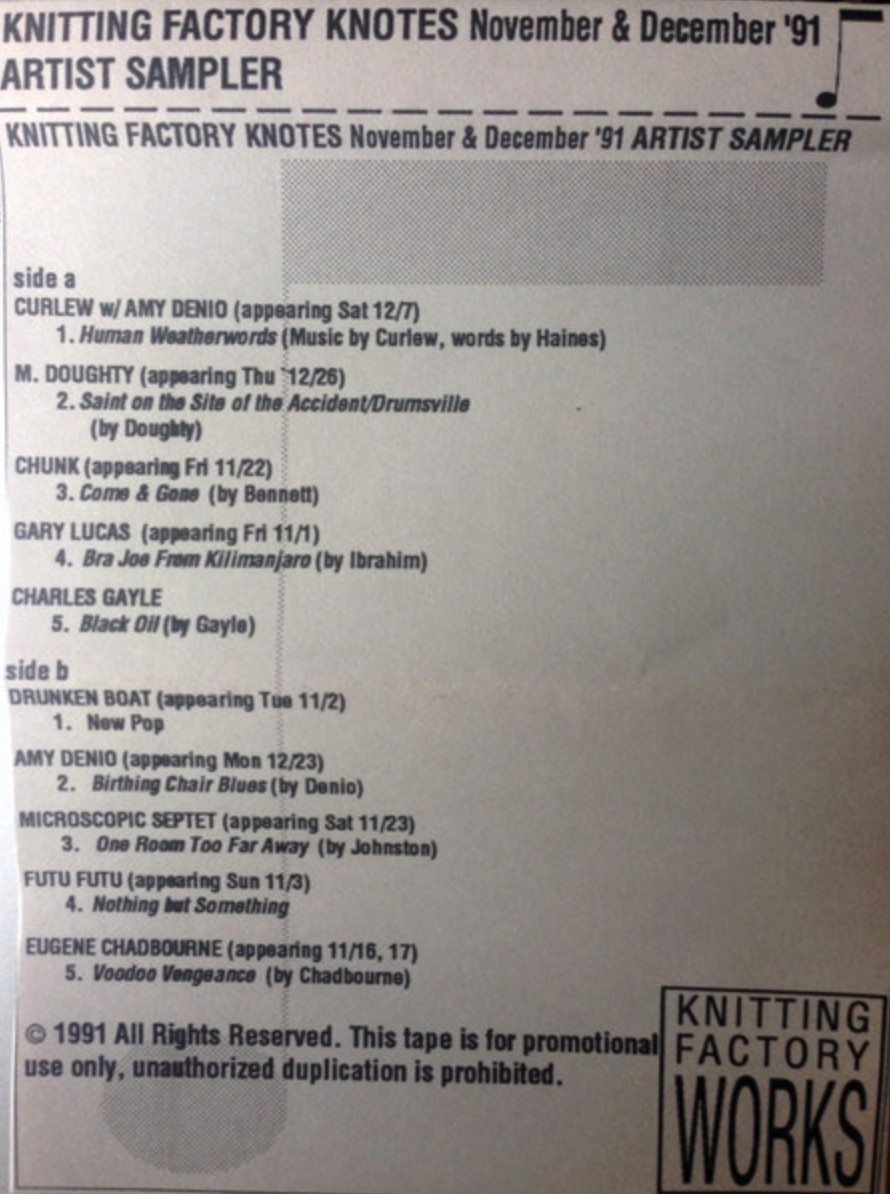
Some of it goes back further than that. The Knitting Factory Knotes artist sampler, a promo cassette for the club's November and December 1991 calendar, has Doughty solo on side A, plugging a solo date on Thursday, December 26, 1991: a poem, "Saint on the Site of the Accident," running into "Drumsville." When the tape surfaced online, in a post crediting the find to @ThePuppetHead1, the song was described as something of an early take of "Soft Serve." The poem's title backs that up: it turns up as a line in the "Soft Serve" lyrics printed with Irresistible Bliss.2 Either way, "Drumsville" was Doughty's six months before the first Soul Coughing show, and before Soul Coffin too. Side B, for the record, opens with Drunken Boat, who would share a Knitting Factory bill with Soul Coughing in 1994.3 The piece didn't stay solo for long, either: a full-band "Saint on the Site of the Accident," recorded at the Knitting Factory, turns up in two different takes on a DAT dated April 1993.
The solo date really happened, too. New York magazine's club listings for that week have the Knitting Factory on December 26 as "Ikue Mori and Joey Baron; M. Doughty," which is pretty heavy company for a doorman. The same month he was on the bill at the Poetry Project at St. Mark's Church, sharing the night with something called Throbbers. Five bucks at the door. So that winter he was a poet, a solo act and a guy who checked IDs, and by the next June he had a band and a play.4
The Knitting Factory
In the early '90s the Knitting Factory was ground zero for downtown New York weirdness: John Zorn, Marc Ribot, Elliott Sharp and the whole improv and noise crowd. Doughty worked the door for about six bucks an hour, according to Contemporary Musicians, and wrote music reviews for the New York Press on the side. Around the club he was known for doing these improvised, half-comedy, half-rap bits. Steinberg called it the Knitting Factory social club scene: everybody played on everybody else's thing, with Ribot, Anthony Coleman or Zorn, while people stood around in the back bar complaining about whoever was playing.56
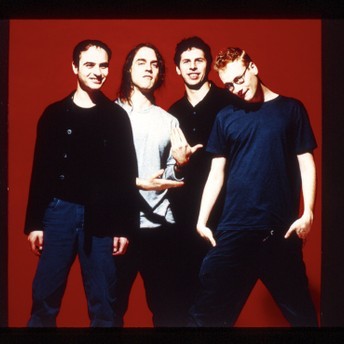
The other three were already regulars on the club's stages, just in other people's bands. Degli Antoni was finishing his master's in composition at Mannes and running with Zorn's circle. He later called the club the place where he learned to be professional.7 Steinberg, on The Bass Shed, recalled that bands formed and gigs got booked there through chance encounters on the street, and that degli Antoni was one of the first engineers he heard of using Pro Tools, working as a classical engineer and editor. Doughty, degli Antoni and Steinberg all played in performances of Zorn's game piece Cobra, and you can hear them on John Zorn's Cobra: Live at the Knitting Factory (recorded 1992, out in 1995). Asked about it on MTV's 120 Minutes in January 1997, degli Antoni said he came to Zorn through the keyboardist Anthony Coleman and that most of what he did with Zorn was game pieces and experimentation. Coleman, David Shea and Zeena Parkins were among the others working at the club then, and the point was building pieces out of sound and frenetic energy. He said he already had that attitude before Zorn and carried it into Soul Coughing. He also mentioned on the show that he was born in San Francisco and moved to New York around 1985.
Doughty filled in a couple of details in a 1996 Warner online chat. The Cobra gigs were actually run by Eric Qin, and Zorn himself wasn't involved in those particular nights. And he met Jeff Buckley at the Knitting Factory in 1992, right around when he met degli Antoni, which is how Soul Coughing ended up on so many bills with Buckley later on. By September 1995 the club had moved, and Doughty told SonicNet there was a record store where the old room used to be. He said he could still picture the marks on the floor he used to sweep.8
Putting the Band Together
Doughty had played in everything from jam bands to hardcore, and he was bored with rock. He told Details he'd gone almost entirely over to hip-hop, wanted something that felt like A Tribe Called Quest, and pictured a James Brown kind of setup with him talking over a band. In a 1995 interview he put it more casually:9 musicians kept coming through the club in different projects, and he wanted something collaborative. He told Greg Kot of the Chicago Tribune in 1995 that he'd listened to nothing but hip-hop from 1990 to '92, right up until he put the band together. He also drew a line there. Soul Coughing was "anything but a hip-hop band," he said, because hip-hop is a culture-specific thing and he wasn't going to borrow a voice that wasn't his.1011
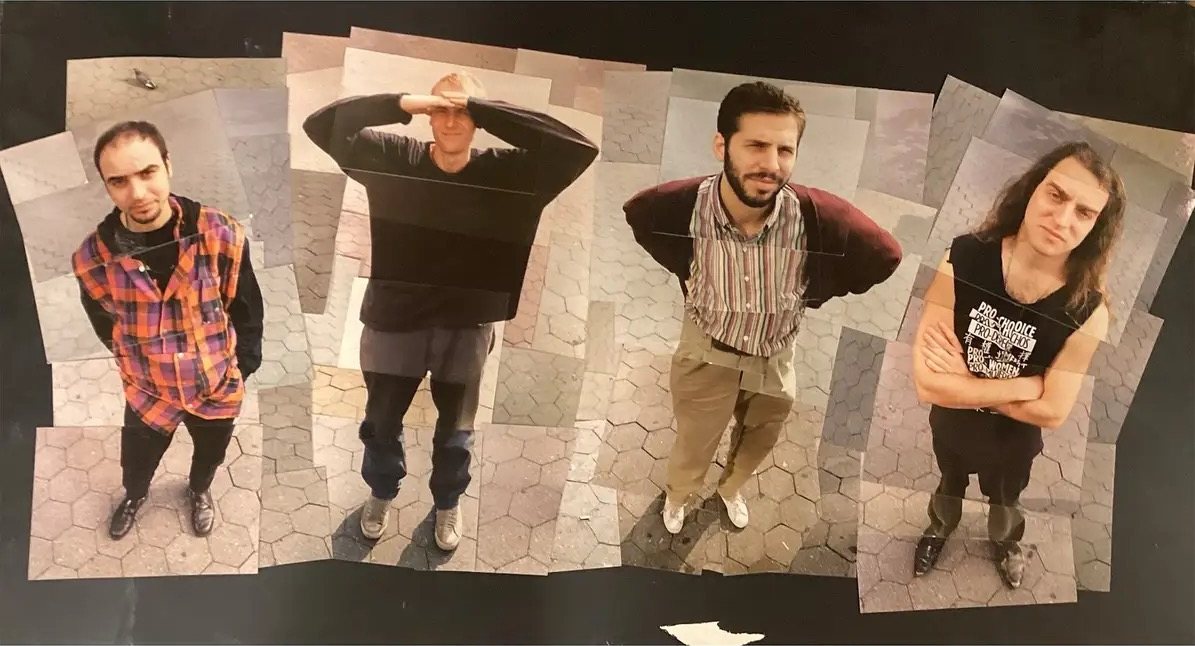
Gabay's 1995 interview with SLUG is the best inside account. Doughty saw him play and asked him to do a gig. Gabay suggested a bass player he knew, Sebastian Steinberg. They had one rehearsal and played the next day. For the first five or six months it was a loose weekly thing that paid maybe fifty bucks a night, and it was only when people started actually showing up that they figured, okay, I guess we're a band.12
Steinberg's version, from Gil Kaufman's 1996 Addicted to Noise cover story, fills in the missing step. The Knitting Factory was basically a clubhouse: musicians stored their gear there, hung out and jammed. Steinberg had no idea who Doughty was when he called, but Doughty had heard of Gabay and was shopping an idea around. Doughty, Steinberg and Gabay bonded over a tape of A Tribe Called Quest's The Low End Theory (and, Steinberg added elsewhere, the Replacements),5 then brought in degli Antoni, who had never been in a band in his life, and the four of them jammed for a few hours the night before the first show. Doughty also told Kaufman his first three records, at age twelve, were Led Zeppelin, Nazareth and Aldo Nova, and that he spent his teens lip-synching for hours a day while panicking that he couldn't sing or play. Relatable. He was also a huge Cheap Trick fan, and in 1984 waited four hours outside Eisenhower Hall at West Point to meet them. By 1996 his current favorites were the Magnetic Fields, Elliott Smith and Echobelly.1314
Gabay remembered that first rehearsal as "definitely weird." Degli Antoni showed up an hour late with a Super 8 camera he used to record sounds, they jammed for an hour and a half "with no real style in mind," and Doughty threw out half-written, half-made-up lyrics and grooves. "At that point, Mark only played about 40% of the time," Gabay said, "and even then we didn't know if it was him or a truck going by the window."
He told the story again in March 1997, to Sue Markert of Syracuse's Orange Source, and added how much of it came down to storage. His drums were pretty much kept at the Knitting Factory, Steinberg had a cabinet there for his bass, and that's how Gabay could suggest him. Nobody had actually heard degli Antoni play; Doughty just knew he played sampler, and he didn't bring it to the rehearsal, only a video camera with the lens cap on, which is one way to record the audio.10 This once, he wanted to get his bearings before playing, and the recording gave him something to work with afterward. It says a lot about how he works: listen first, then build, with whatever's on hand. His hand-labeled DAT tapes are still where much of the earliest material comes from, and by 1995 he was changing his samples on the fly every night. Before the band, Gabay said, degli Antoni was working as a recording engineer, Gabay was in two bands and writing dance scores, Steinberg "played with half of New York," and Doughty was working the door. About six months in, once people were reacting, they decided this was a band.15
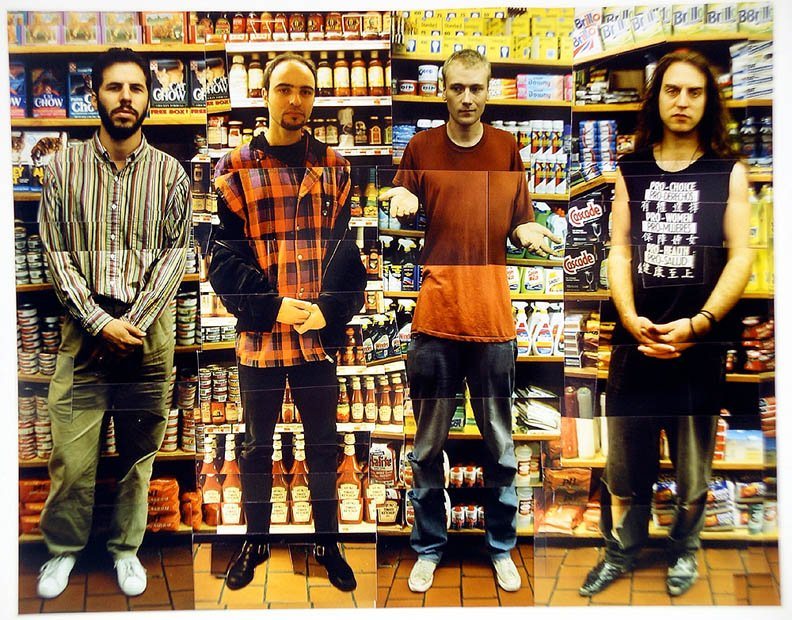
The same piece runs through everybody's résumés, and they're great. Gabay moved to New York at 21 after his Israeli army service and spent twelve years in rock bands, a house band called Electric Outhouse, belly-dancing orchestras, wedding bands, jazz and avant-garde groups and, he admitted with a wince, a "moroccanroll" band. Steinberg, whose mom liked to remind him that "bass players are born not made," came up on reggae, Ornette Coleman and Fats Waller, then hid out in a wedding band through the eighties, when "music just got stupid." His worst day jobs were moving furniture ("not a good idea for a musician who values his fingers") and shooting photos for novelty T-shirts, where "you'd always get the guy wanting to put a picture of his tongue on a pair of his wife's panties." Doughty went from hardcore bands "so lousy they could hardly be termed hard-core," to a "crude funk/metal prototype," to folk singing, which is where he learned to turn his more and more abstract poems into actual songs. Degli Antoni told his side in a 1999 SCUG interview. He grew up in San Francisco and San Mateo, and a composition teacher told him anyone serious about music had to move to New York, so he did, and lived on bowls of rice for years. By the time the band started he was working at a studio, mixing, producing and writing for people like Spalding Gray, William Wegman and choreographer Karole Armitage.7
The Name and the First Show
The band name came from a poem Doughty wrote about Neil Young throwing up in the back of a bus. Everybody who read it said the poem was bad but the title was good, so he kept the title.9 When Soul Coughing shared the 1997 H.O.R.D.E. bill with Neil Young, apparently nobody on either side brought it up. Probably for the best.
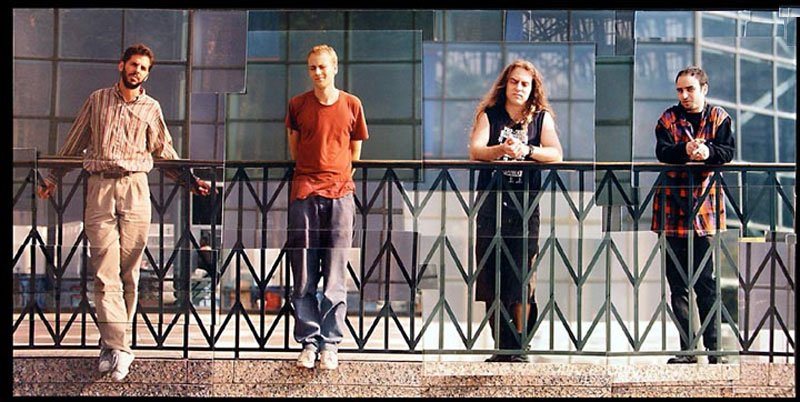
The phrase is older than the poem. Steinberg told The Virginian-Pilot in 1996 that a friend used "soul coughing" as offhand slang for throwing up, Doughty built the Neil Young poem around it, and "everyone hated the poem but loved the name." The liner essay in Lust in Phaze repeats the barf definition, which fans on the newsgroup figured was Doughty messing with the writer. Turns out it wasn't.161
The first gig, on June 15, 1992, was a late Monday slot Doughty talked his boss into, mostly because nobody else wanted it. That was the doorman's perk. Degli Antoni explained it in 1999: work the door and you could land a slot "like a Wednesday night at 1 o'clock in the morning."17 The 1998 El Oso press bio and Contemporary Musicians both put the crowd at 17. Seventeen. Gabay remembered the invitation a little differently in a 1995 Chicago Tribune profile: Doughty called him about three years earlier, and he thought, "Thursday, 3 a.m.? Sure, I'm free." Doughty's 1997 telling on 120 Minutes adds the Monday-at-2-a.m. detail and a bass problem: working the door made booking easy, he asked Gabay first, and the bassist he'd lined up, a sound guy on a soap opera, bailed when a plot twist put him on overtime. Gabay brought in Steinberg, they did a single rehearsal, and that was the birth of the band. They weren't exactly strangers in the room, either: on the tape of that night, Doughty says from the stage that he can personally name everyone in the room, because they're all his friends. He calls a few out by name, among them Norman Yamada, degli Antoni's composition classmate at Mannes and the downtown composer who shared a bill at Roulette with degli Antoni two years later.18196
And yes, it was the four of them, just like Steinberg and Gabay tell it. Then things got a little weird. By the August 13 Knitting Factory gig, Steinberg was out and the soundboard tape has Wilbo Wright on bass and cellist Catherine Bent alongside Doughty, degli Antoni and Gabay; Doughty introduces the two of them from the stage after "Blues She Blew."20 Degli Antoni says Steinberg wasn't fully locked in yet in those first months. Rehearsals sometimes meant waiting around in Gabay's basement to see if he'd show, so Doughty kept the gigs going with whoever was around.21 Wright's exit has a better story: he's said to have left after a big plot twist on a soap opera he was also working on,9 though he kept playing, and in 1993 he joined Ui, Sasha Frere-Jones and Clem Waldmann's New York post-rock band.22 Bent left around the same time. Once Steinberg was back for good, the lineup didn't change for eight years.
One debut a month apparently wasn't enough. That same June, Doughty had a play running, Tragic Straight Man, which New York magazine's theater listings described as "M. Doughty's saga about an unfathomably bland man obsessed with Charles Mingus." Unfathomably bland. Somebody put that in print and meant it as a selling point. Christina Fallon directed, Chris Baskos, Terry O'Riley and Tom Valetti starred, and it ran Thursday through Sunday nights into early July at the Sidonia Milano Atrium on West 11th Street, for eight bucks a head. No reviews survive, which for a play about a bland man is either a tragedy or a rave. So: a guy obsessed with a bass player, written by a guy about to spend the next eight years standing next to one.23
Firehouse and the First Recordings
The first real recordings happened in a hip-hop studio. Yoram Vazan, a friend of Gabay's, ran The Firehouse out of a two-bedroom loft on Dean Street in Boerum Hill, across from an actual firehouse. The control room was a bedroom, the live room was the living room, and the vocal booth was a walk-in closet. That closet had already been used by MC Lyte, Gang Starr and Das EFX, and the Wu-Tang Clan cut "Protect Ya Neck" there right around this time.24 Not bad company for a band playing to seventeen friends.
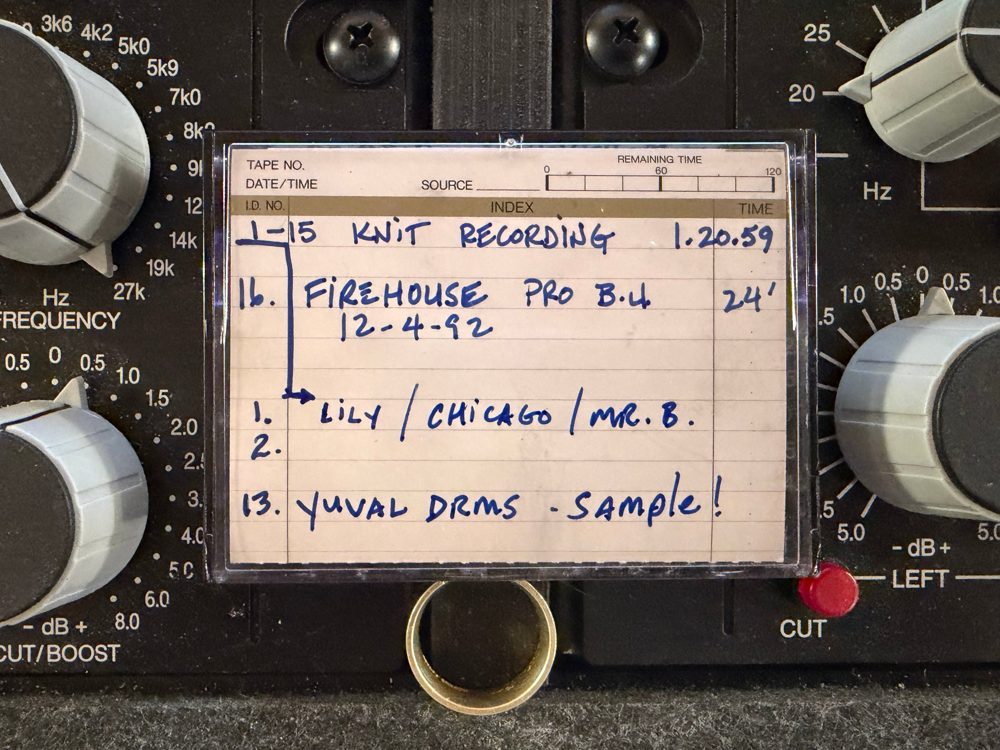
The band did two sessions with Vazan. The first was in Brooklyn on December 4, 1992, and produced early versions of "Casiotone Nation," "Supra Genius," "City of Motors," "Bus to Beelzebub," "Moon Sammy" and "Jersey Devil." By the second, in April 1993, Vazan had moved the studio to the West Side of Manhattan, and degli Antoni's DAT label calls it the "New Firehouse." They played, it went to multitrack tape, and Vazan did the first edits, finding the good stuff in the jams and shaping it into songs. Degli Antoni figures they were mostly documenting what they had and maybe using it to land a few gigs. Nobody was shopping it to labels.21
"Screenwriters Blues" came together right in the middle of this. Doughty came over to degli Antoni's apartment on Sullivan Street, heard the loop, and said he had a poem for it. About a week later they played it at a loft gig in Chinatown, with Steinberg and Gabay hearing it for the first time on stage, which was pretty much how things worked back then. Two or three weeks after that, at the West Side Firehouse, Steinberg said they should formalize it. He came up with the bassline, he and Gabay locked in the groove, and it became a song. That session also got "Mr. Bitterness," "Uh, Zoom Zip," "Michael Jackson" and "I Shot Lily Brick Down."21
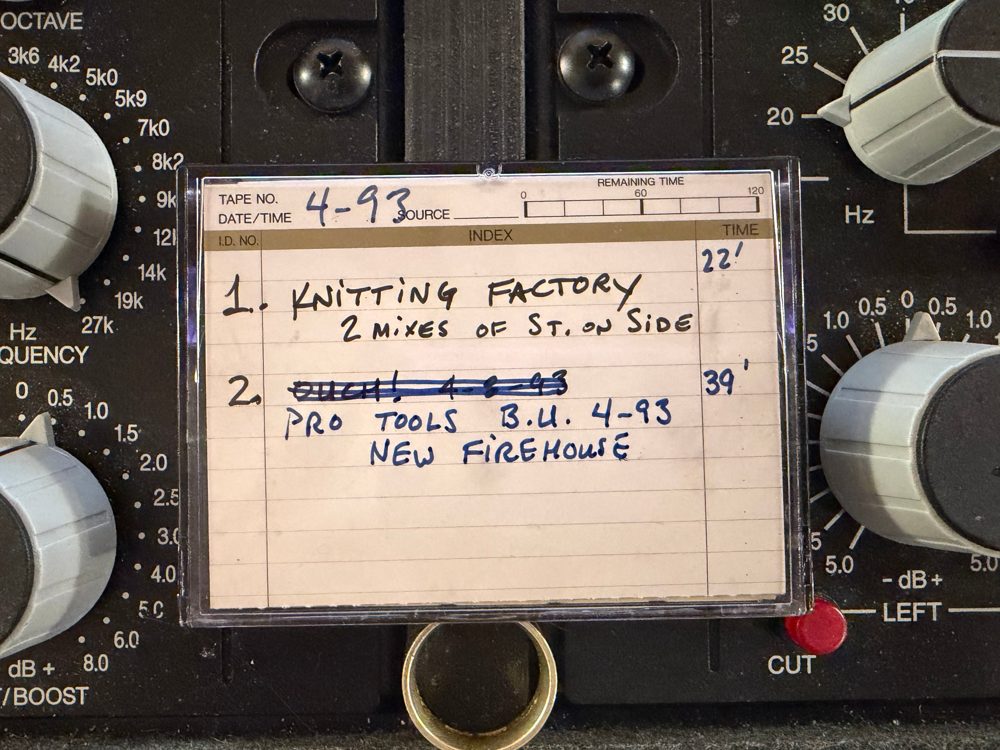
Degli Antoni had been working at Harmonic Ranch since 1990, and that's where he and Doughty took the stereo mixes and cut them into their own versions of the songs. This was Pro Tools 1.0 on a Mac IIfx. Each rack unit gave you four tracks, and more tracks meant buying another unit. There was no volume automation: you made copies of a track at different levels and moved the audio between them. Fades got bounced as separate audio files, so a fade-heavy edit could eat hundreds of megabytes. Their hard drive held one whole gigabyte and cost about a thousand bucks. Nothing could stay on it, so sessions were backed up to DAT as data instead of audio. That's a big part of why these tapes went unheard for over thirty years.21
Around the same time, degli Antoni was spending his days in the studio with Christian Marclay. He'd been giving Knitting Factory friends cheap studio time, and he and Marclay did a dance score and an installation together.7 He said Soul Coughing was unlike anything else he was involved in.21 As for the September 1992 and April 1993 Knitting Factory recordings, the ones that sound like an empty room, his best guess is that the band came in late or on a weekend and just played live to stereo with the house engineer.
CB's Gallery and "Deep Slacker Jazz"
In 1993 the band built its crowd next door to CBGBs, at CB's 313 Gallery, the club's smaller art-space room on the Bowery. Doughty started a club night there called SLAW, modeled on the jazz and hip-hop party Giant Step, and it pretty quickly turned into a Soul Coughing showcase. The posters billed it as "Deep Slacker Jazz," a clever twist on The Who's old "Maximum R&B" tagline, and the name stuck to the band forever.25
Per Steinberg, the debut turned into a regular 2 a.m. Tuesday slot at the Knitting Factory, then Wednesdays at CB's Gallery, then Fridays too. Gabay told SLUG they basically took over the room every Wednesday and Friday: rented a PA, projected 8mm films on the wall and brought in a DJ friend. Steinberg's take, from the El Oso press bio: once people started dancing, anything could happen. A soundboard tape of the December 17, 1993 CB's 313 Gallery show is up in the Internet Archive's Soul Coughing collection if you want to hear what that sounded like.1912
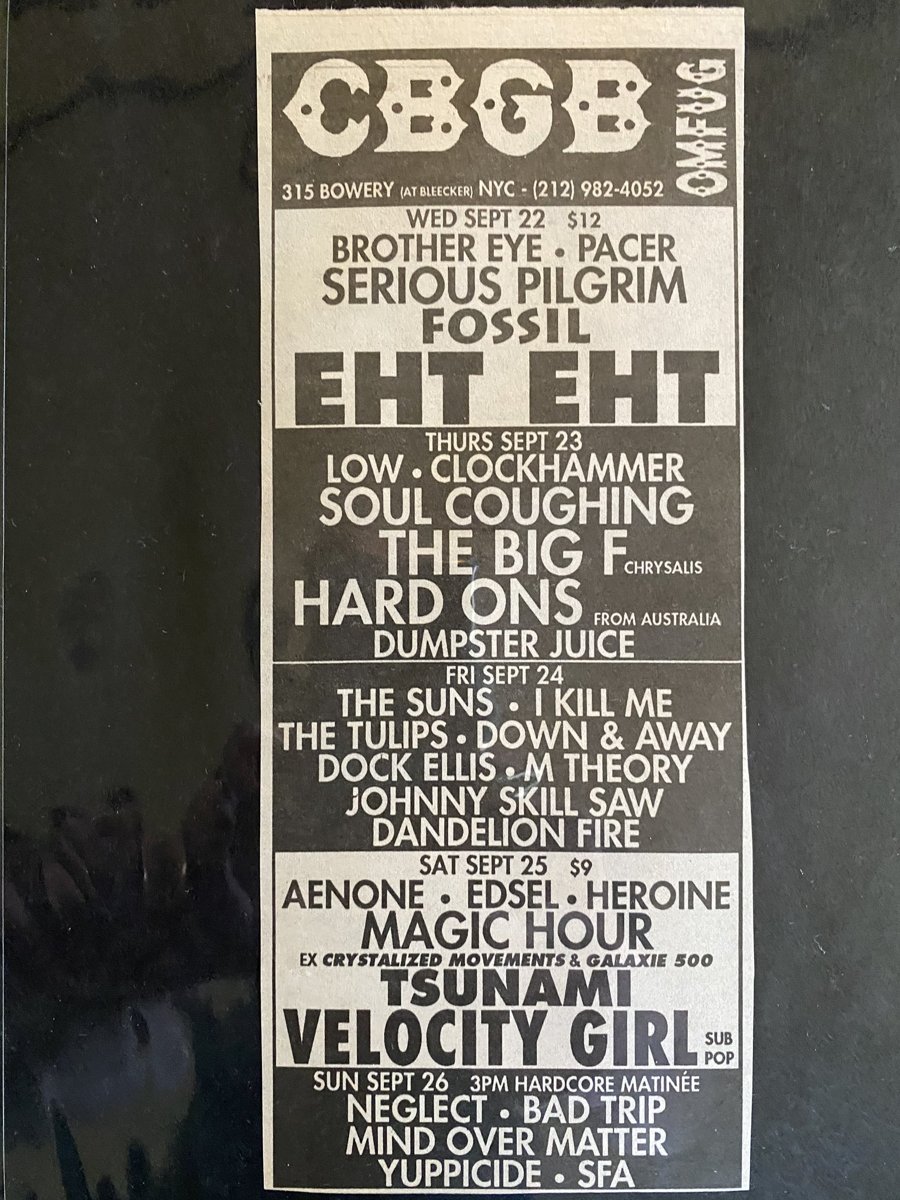
They did make it into the big room next door, too. A newspaper ad for CBGB's week of September 22, 1993 has Soul Coughing on Thursday the 23rd with Low, Clockhammer, The Big F, the Hard-Ons (from Australia) and Dumpster Juice. Quite a bill to open for, or be opened by.
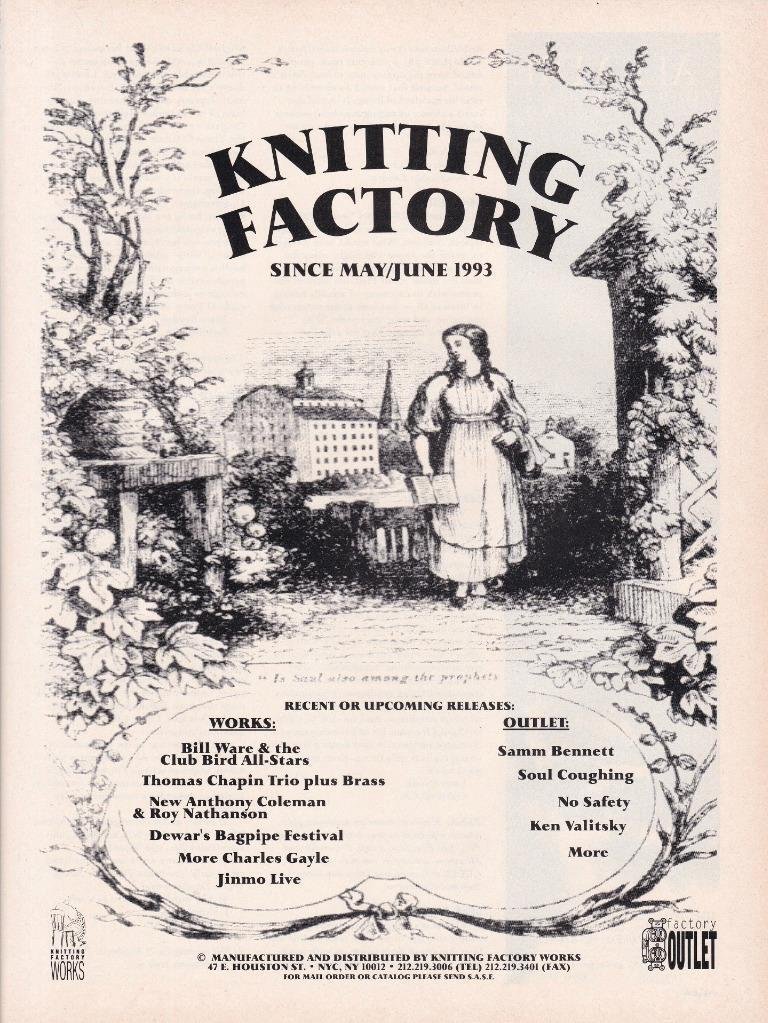
There was almost an indie record first. The band had planned an album called Double M for Knitting Factory Records,9 and it sat in the label's catalog for years, which sent fans hunting for a record that never existed. Doughty told a reporter in 1994 that the small label offered too little money, so he decided to just play New York for fun instead.
An undated Knitting Factory Works ad ("Since May/June 1993") shows the label did announce it. Soul Coughing is listed under Outlet, in the recent or upcoming releases, between Samm Bennett and No Safety. Nothing came of it that we know of. The deal that did come through was with a much bigger label, and it happened because an A&R man couldn't get into the club next door.
-
alt.music.soulcoughing newsgroup, 1996 to 2013, via UsenetArchives.com. ↩︎↩︎
-
Irresistible Bliss Japanese edition booklet, London/PolyGram POCD-1222, 1996: credits, lyrics, and liner notes by Toru Watanabe, April 1996; shared by @osoarchive. ↩︎
-
Knitting Factory Knotes artist sampler, November and December 1991, Knitting Factory Works promotional cassette; find credited to @ThePuppetHead1. ↩︎
-
New York magazine listings, December 16 and December 23, 1991. The Poetry Project date is printed as 11/16 in a mid-December listing, almost certainly a typo for 12/16. ↩︎
-
Sebastian Steinberg, phone interview, October 22, 1996, WILMA (page updated November 11, 1996). ↩︎↩︎
-
"Soul Coughing," Contemporary Musicians, Gale, c. 1998, via Encyclopedia.com. ↩︎↩︎
-
Jessica Dungan, interview with Mark degli Antoni, SCUG, November 1999. ↩︎↩︎↩︎
-
SonicNet chat with Doughty and degli Antoni, September 12, 1995, and SonicNet show coverage. ↩︎
-
Greg Kot, "Defying Categorization," Chicago Tribune, February 17, 1995. ↩︎↩︎
-
Doughty interview, Details magazine. ↩︎
-
Yuval Gabay interview, SLUG Magazine, Salt Lake City, October 1995. ↩︎↩︎
-
Warner Bros. Cyber-Talk with Doughty, Lyon, September 16, 1996. ↩︎
-
Gil Kaufman, "Soul Coughing Beat the Sophomore Slump," Addicted to Noise, 1996. ↩︎
-
Sue Markert, "We Call It Soul Coughing," interview with Yuval Gabay, Orange Source, Syracuse University, March 3, 1997 (posted March 31, 1997). ↩︎
-
"Evolving Soul Coughing Can't Be Pigeonholed," The Virginian-Pilot, October 18, 1996. ↩︎
-
Don Mayhew, "Who Are These Guys?," The Fresno Bee, February 2, 1999, p. E1. ↩︎
-
Soundboard recording of the first show, Knitting Factory, New York, June 15, 1992. ↩︎
-
Soul Coughing, El Oso press biography, Slash/Warner Bros., 1998. ↩︎↩︎
-
Soundboard recording, Knitting Factory, New York, August 13, 1992. Internet Archive Live Music Archive. ↩︎
-
Mark degli Antoni, conversation with SCUG, November 2026. ↩︎↩︎↩︎↩︎↩︎
-
OndaRock, Soul Coughing monograph (Italian). ↩︎
-
New York magazine theater listings, June 22 and June 29, 1992. ↩︎
-
Phillip Mlynar, "Interview: Yoram Vazan of The Firehouse", Red Bull Music Academy Daily (June 5, 2013). ↩︎
-
Last.fm, Soul Coughing biography. ↩︎