Most bands put out a single, then an EP, then wait by the phone. Soul Coughing skipped all that and went from a club night on the Bowery to Slash Records, an independent label distributed by Warner Bros. Ruby Vroom came out September 27, 1994.
The Signing
The A&R man was Randall "Randy" Kaye of Slash Records, and he found them by accident. Doughty told a reporter in October 1994 that Kaye had come to see Boss Hog at CBGBs, couldn't get in, wandered next door to CB's Gallery for a coffee, and walked into a Soul Coughing set. Doughty joked that the band owed its whole career to Boss Hog's popularity. The deal was done in 1993, after the band sorted through a few offers. Steinberg told Rolling Stone in 1996 he had chased contracts for years before joining and could hardly believe it when offers started arriving. They had picked up management along the way, too: the early credits list Jim Grant and Seriously, Inc.1
Steinberg remembered it as a hype storm. He told the Michigan Daily in March 1995 that for a while nearly every A&R person in the business wanted a meeting, and that the labels came to the band, pulled in by the live shows. His own commitment deepened when he happened to hear one of the band's tapes at a friend's apartment and was knocked out by the grooves.2
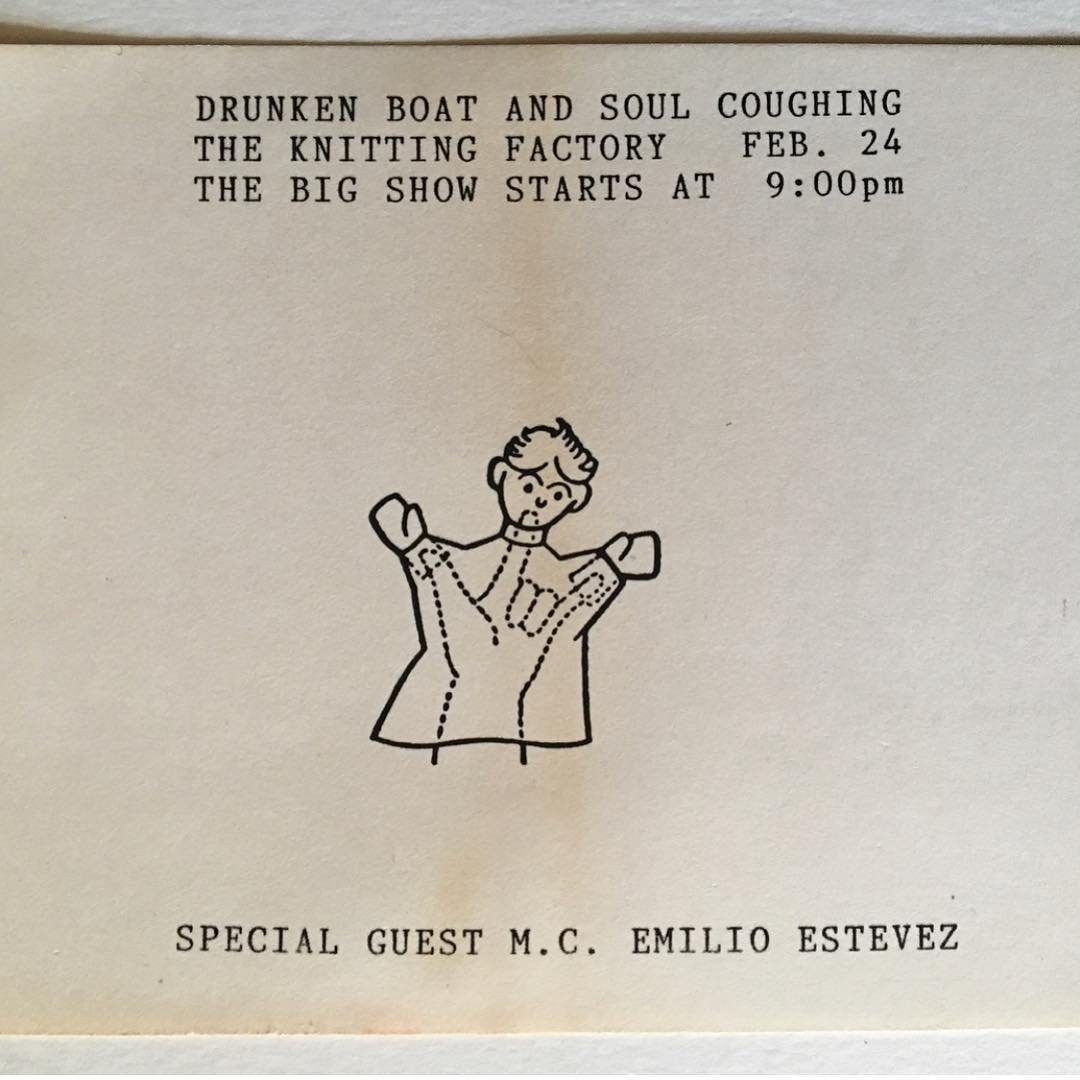
Degli Antoni later said the band had other offers, from Columbia, Caroline, Atlantic and Imago. They chose Slash because it was an independent distributed by Warner in North America and London/Polygram overseas, and they trusted it to leave the records alone while still backing them. Asked what caught the labels' attention, he credited Gabay: at early shows you could barely hear the keyboard player, only sometimes the upright bass and the blond guy waving his hands, but the drummer would not quit.
Making the Record
Ruby Vroom was tracked April to June 1994 at Sunset Sound Factory in Hollywood with Tchad Blake producing, recording and mixing. Blake and Mitchell Froom used that room as home base, and a storage closet off the lounge was packed with vintage keyboards and road cases of toys: whistles, rattles, toy xylophones. Plenty of it made the record, including a train whistle Doughty blows on "Uh, Zoom Zip."
Blake came to the project through two routes. While the band was weighing label offers, they had reached out to him through David Kahne while a Columbia deal was under consideration; nothing came of that when the deal fell through. Once they signed with Slash, co-founder Bob Biggs, who already knew Blake's work, called him directly.3
Blake wasn't the only name on the list. Steinberg said the band interviewed several producers before settling on him, and that what won them over was his knack for catching a moment, which suited a band that wanted its live sound on tape.2
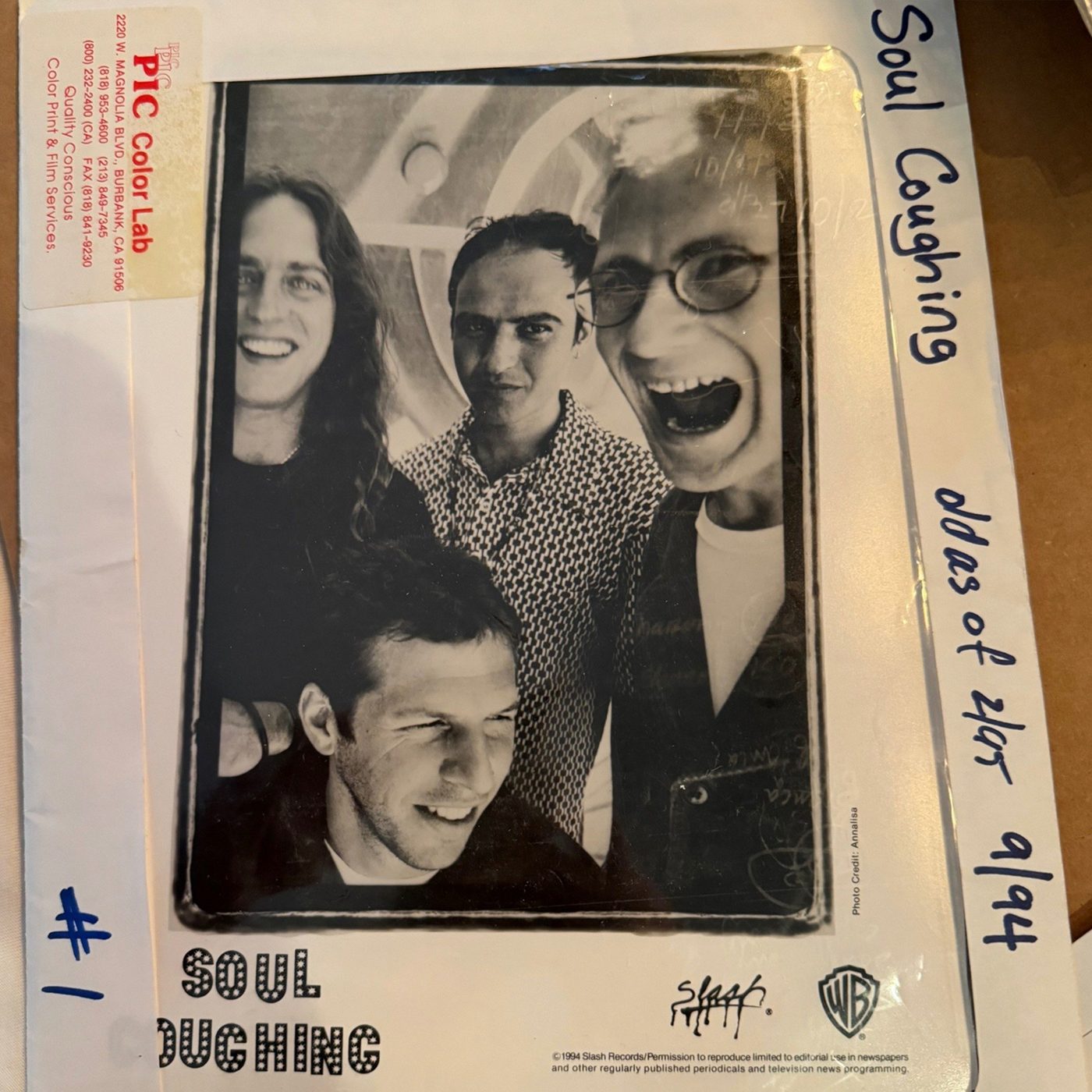
Blake's methods were as unorthodox as the band. Per Wikipedia's account he put a binaural dummy-head microphone in front of Gabay's kit, mounted a mic inside a car muffler (nicknamed "the Bone") in the drum booth, and had Doughty scream ad-libs on "Casiotone Nation" through an Ahuja bullhorn-on-a-stick PA Blake had bought in India.4
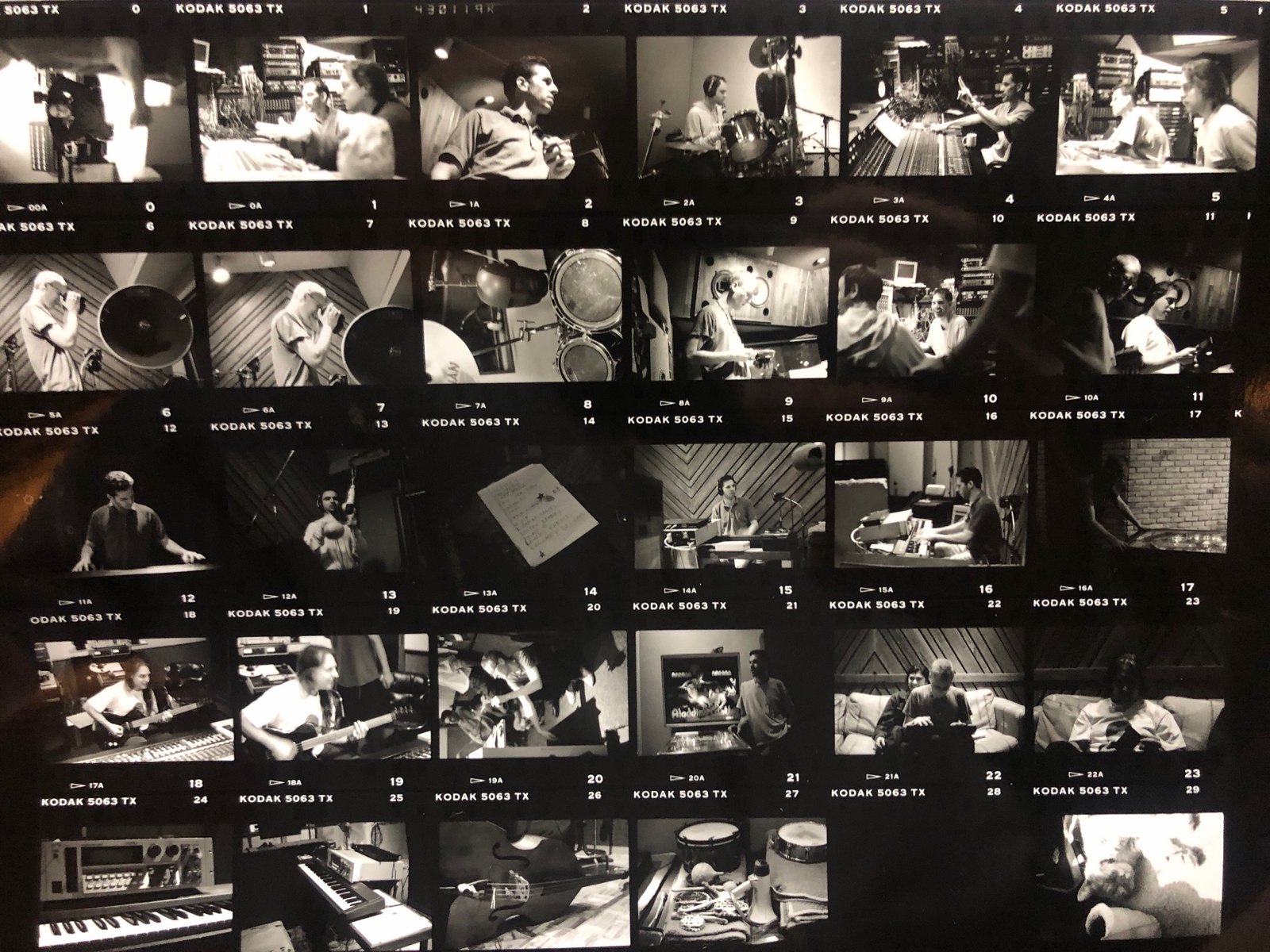
Blake filled in the rest himself in a 2007 Gearspace Q&A. The record was tracked and mixed in 29 days in Sound Factory's Studio B, still his favorite tracking room, on a 1970s API desk, and it was mostly cut live, with some keyboards, vocals and guitar overdubbed later. The drums went in Studio B's tiny vocal booth, which he said was a big part of his drum sound on every record he made from 1986 to 1998, with the Neumann dummy head as the overhead and a mono mic buried between the kick and snare, squashed through a Level Loc. Steinberg's bass ran through a SansAmp, a tube U47 and dbx 160s, which Blake said brought out the growl Steinberg plays with. On degli Antoni he kept it short: "That's Mark. What more can I say." And Doughty, he said, is such a characterful singer that the mic hardly mattered.5
The same Q&A goes deeper for anyone who wants the details. The booth was just big enough for a medium kit, and the drummer had to be fairly agile to climb back out. Asked how he got the long, 808-like kick on the record, Blake said he couldn't remember exactly, but it would have had SansAmp on it, and it may have been a little red Remo student kick, 18 or 20 inches, that tends to sound that way. The overheads got a second copy run hard through Spectrasonics 610 compressors and blended in under the clean signal, the mono kit mic sometimes went through an MXR flanger pedal to shake up its tone, and the keyboards may have had a touch of a Hughes SRS AK-100, a consumer stereo enhancer he was fond of. When he got to the bass chain he asked John Paterno, who was reading along, to help him remember. He described the Ahuja too: a small, cheap PA from New Delhi with an 18-inch horn and an amp head with a cassette deck built in, bought new with a delay and three mics for about $150. And he mentioned that Doughty sang "The Bunny" on Mitchell Froom's solo album Dopamine through a D112, a mic that usually lives inside a kick drum.5
Blake never changed his mind about the room. Back in Studio B in 2005 to make a Bonnie Raitt record, he told Mix it was the best-sounding room he had ever worked in.6
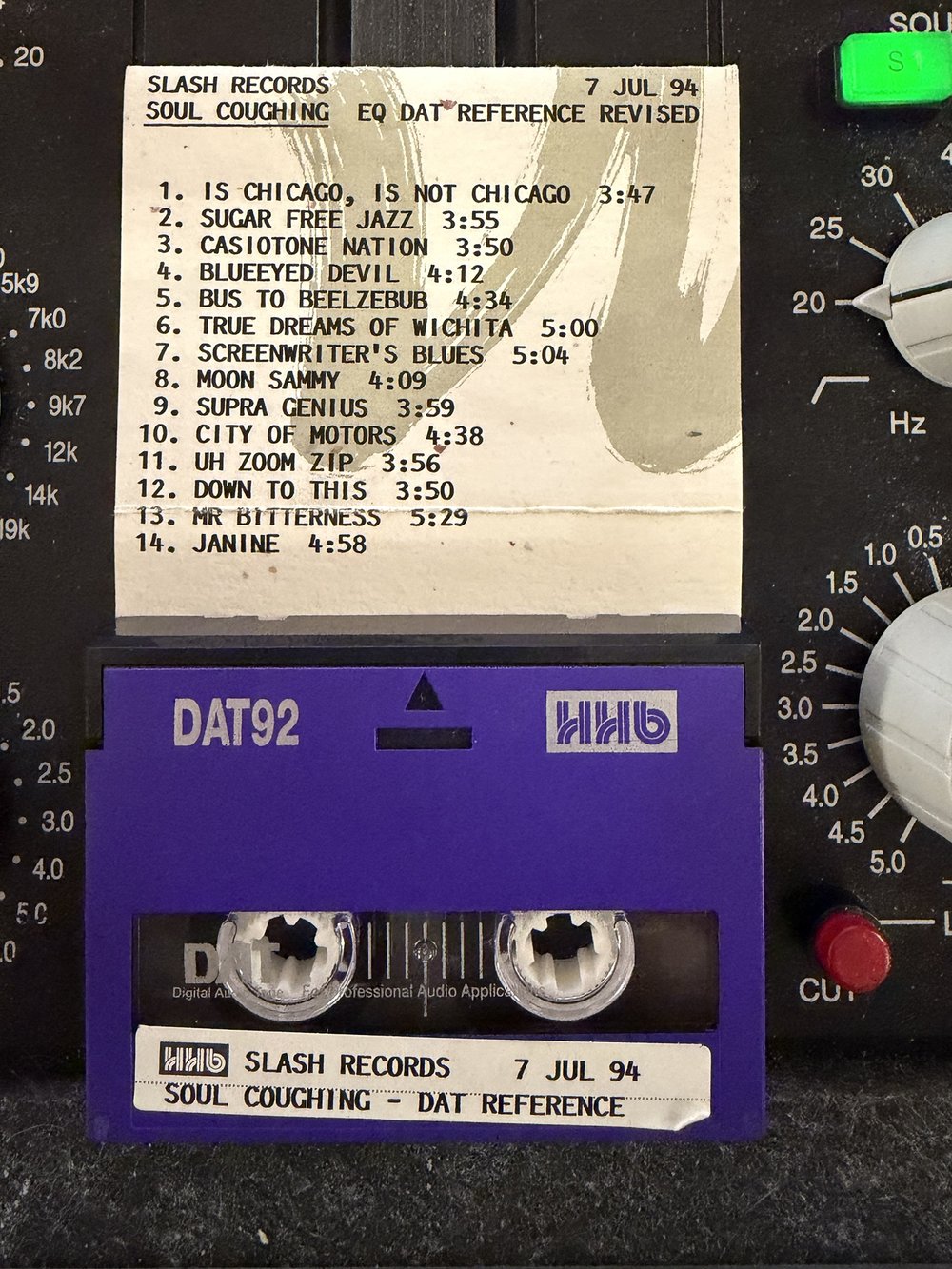
Once the mixes were done, the record went off to be mastered. A DAT labeled "Soul Coughing EQ DAT Reference Revised," from Slash Records and dated July 7, 1994, holds all fourteen songs in the album's running order, "Is Chicago, Is Not Chicago" (3:47) through "Janine" (4:58). The word "Revised" means there was at least one earlier version. That was two months before the album came out, and a little over a week after the session credits end in June.
The CD credits date the sessions "April and June 1994," which points to two blocks of work rather than one straight run. John Paterno was the second engineer, credited as "Second Engineered With Much Girth."7 Blake said as much in a July 1994 radio interview, two months before the release: "There may be, you know, one small overdub or something on there, but most of it is live."3 For all its studio sheen, the Houston Press reported in 1996, about 95 percent of the album was cut live.8 A year after the sessions Doughty was still raving about Blake to Denver's Westword, especially what he did with the stereo field and the sonic spectrum.9
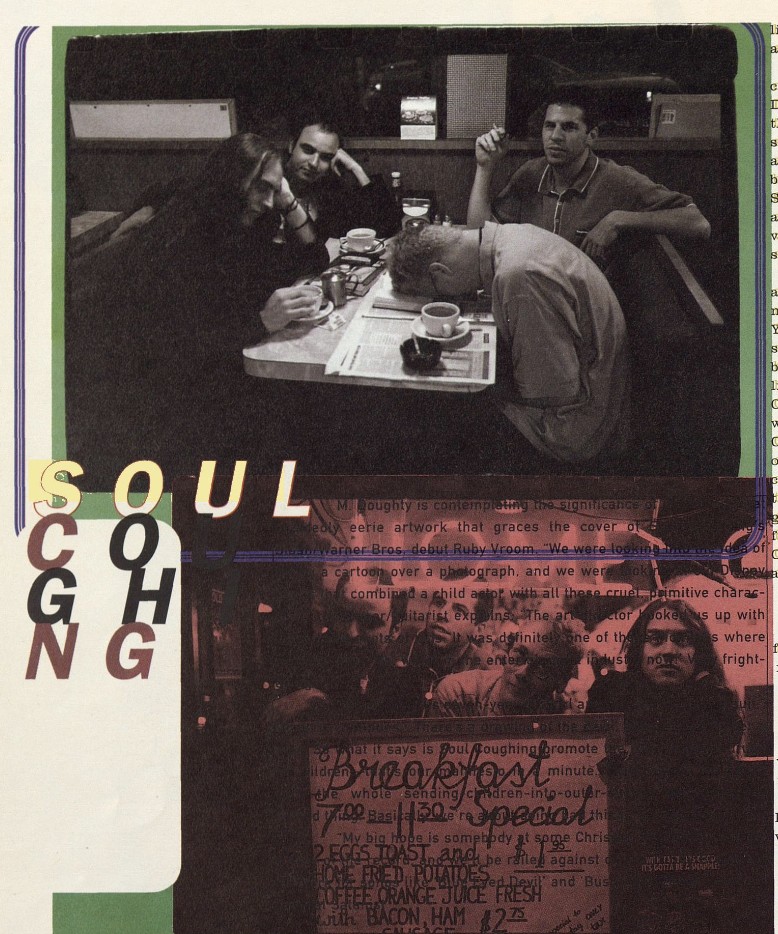
Ray Gun wrote the band up that December with a diner shoot, M. Doughty face down on the table. The piece also gets into how the cover came together, including the idea of putting a cartoon over a photograph.10
The only guest is Rachel Benbow Murdy, Doughty's ex-girlfriend. A year before the sessions she had gone to a payphone in Sheridan Square and sung "Lemon Tree" with an improvised melody into their answering machine. Doughty and Steinberg then recorded the tune at the Knitting Factory during the daytime with house engineer James McClean, who put a mic on the answering machine. That became "Janine."
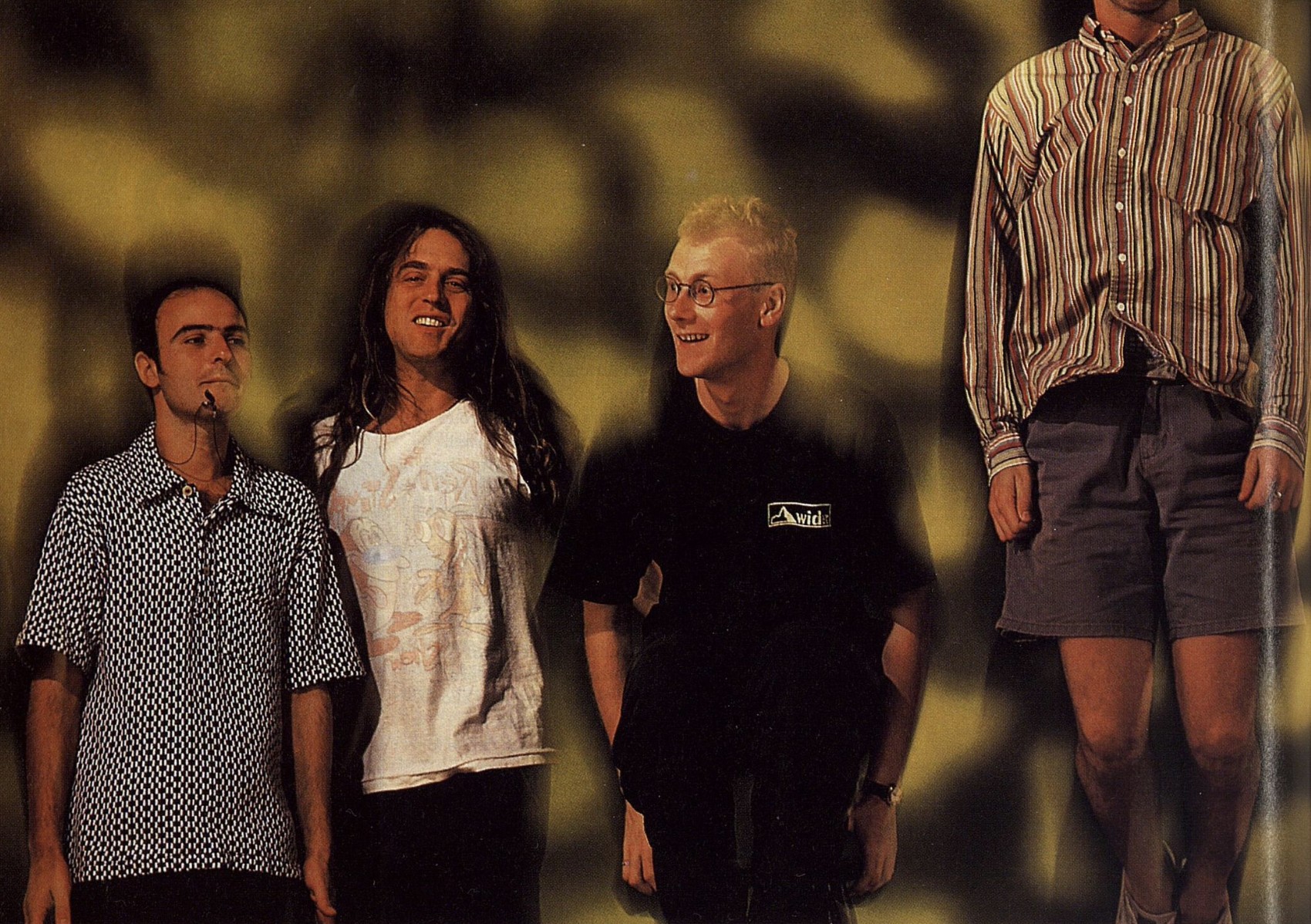
The liner notes nod to Saskatoon, and Doughty said two Canadian friends from Guelph, living in the East Village, heard the finished record first. The whole thing, he said, was "trip-tested to Canadians."11
Steinberg later called the album a postcard from New York, even though it was made in Hollywood, and thought it was funny that Irresistible Bliss, cut in New York, ended up less about the city.12
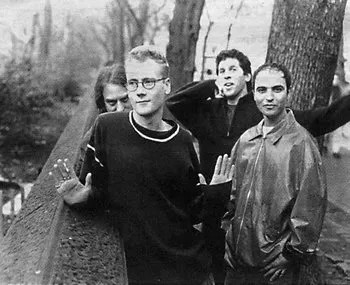
Option's September 1994 issue, just ahead of the album, ran a profile of the band with this photo.13
The Roughs
Rough mixes dated May 4, 1994, show what the band actually cut at Sound Factory: 18 songs, 19 takes. Thirteen made the album. The one album track missing is "Janine," which fits, since it was put together separately at the Knitting Factory around the answering-machine tape.
The other five stayed in the can for a while. "Murder of Lawyers," "Buddha Rhubarb Butter," "I'm Living on Baby Food" and "Theme from Rachel's Sitcom" turned up over the years on promos, compilations and finally the 30th anniversary edition. "Disseminated" is the odd one out. It's the only song on the roughs with two takes, and it was held back entirely, then recut for Irresistible Bliss two years later.14
The timing fits the credits, too. With tracking in April and mixing in June, the roughs look like the band's take-home tape from the gap in between.
The Samples
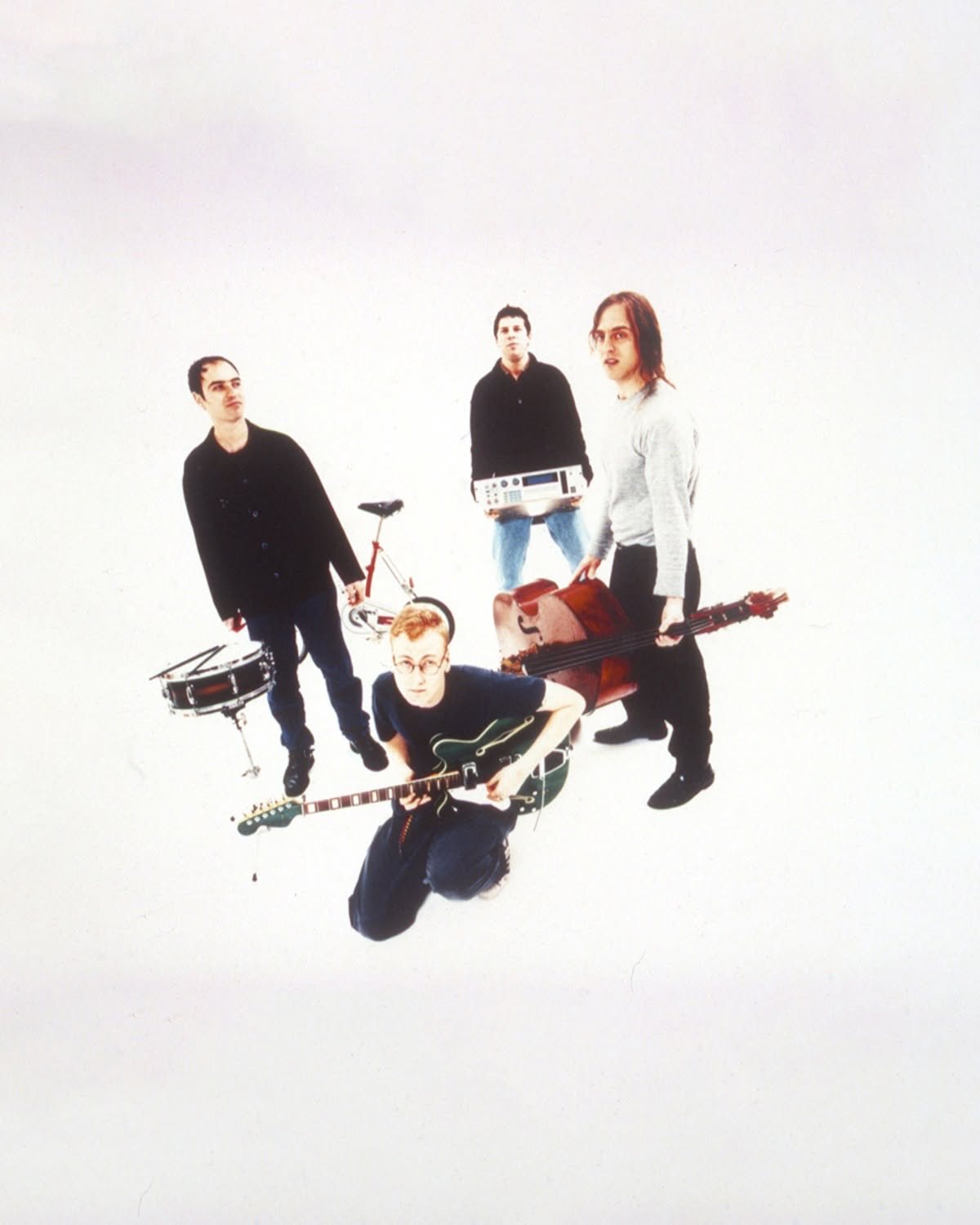
Degli Antoni's sampler is the record's signature. "Bus to Beelzebub" rides a long loop of Raymond Scott's "Powerhouse," and "Uh, Zoom Zip" borrows from Scott's "At an Arabian House Party" along with A Tribe Called Quest's "Jazz (We've Got)" and Bobby McFerrin's cover of "Opportunity." "Down to This" pulls from Toots and the Maytals' "Time Tough," Howlin' Wolf's "Smokestack Lightning," the Roches, and the Andrews Sisters' "Don't Sit Under the Apple Tree," whose chorus took some real legal wrangling to clear.15 "Blueeyed Devil" grabs Benny Goodman's "Clarinet a la King," and Erroll Garner's "Don't Be That Way" turns up in both "Sugar Free Jazz" and "Mr. Bitterness."16 Not everything borrowed was a sample: on "Casiotone Nation," Doughty works a few words from Fugazi's "Waiting Room" into the lyric. "Screenwriter's Blues" loops degli Antoni's own orchestral horn writing. Elsewhere the band quotes the Courageous Cat theme and Monk's "Misterioso." Degli Antoni told SCUG (Soul Coughing Underground) in 1996 that he had also lifted Tori Amos's voice from her "Smells Like Teen Spirit" cover for "City of Motors" and "Mr. Bitterness," bragged about it publicly, and never got caught. Every sample we've tracked down, song by song, is on the Samples tab.17
Doughty explained "Is Chicago, Is Not Chicago" in a 1995 SonicNet chat: he was tripping in Chicago and it struck him that everything outside his body was Chicago and everything inside was not. (Someone on a Usenet group then accused him of lifting the idea from Descartes.) He also confirmed a backward message hidden at the end of "Uh, Zoom Zip" that he had forgotten about until he relistened.1819
The Title
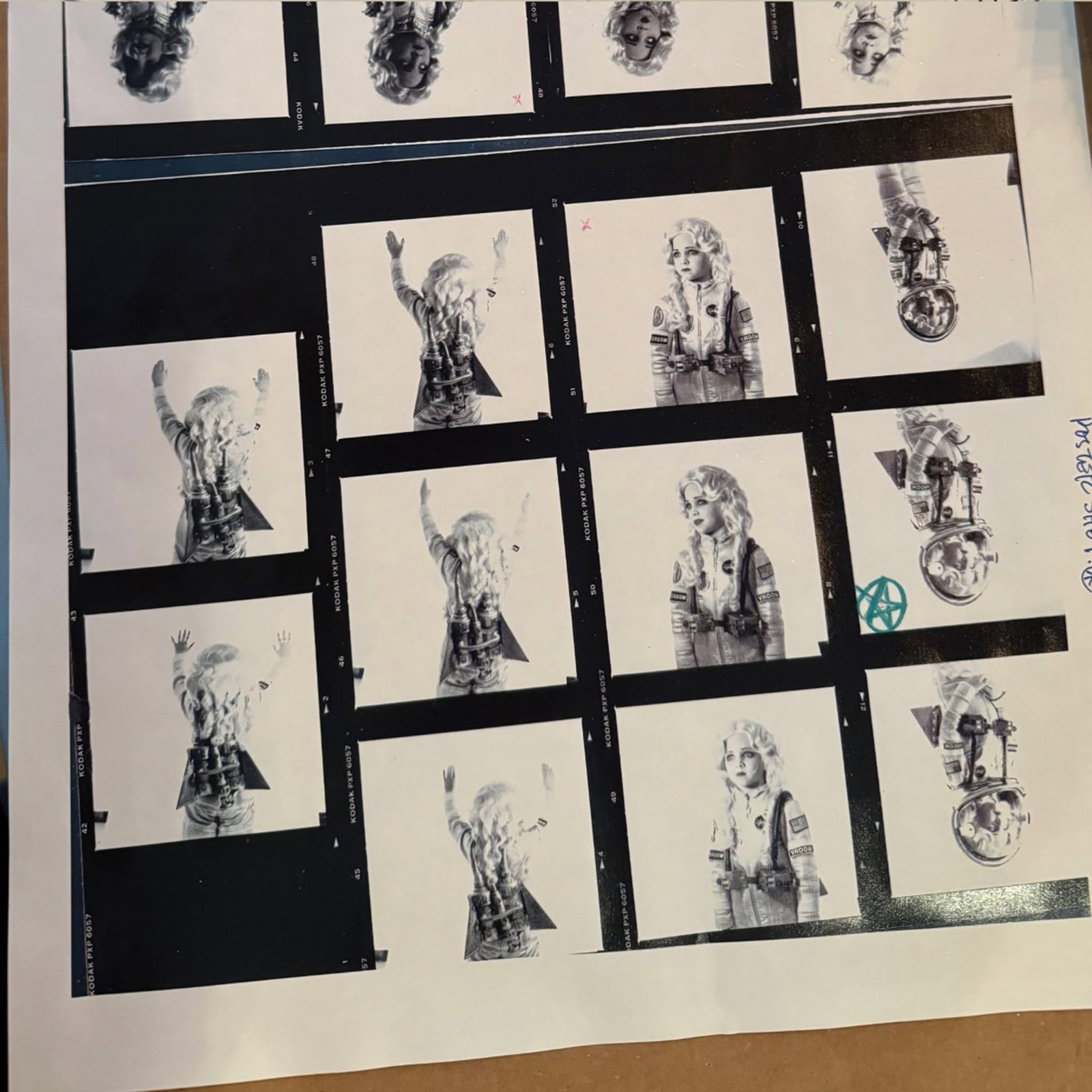
Ruby Froom, the young daughter of Mitchell Froom and Suzanne Vega, sometimes visited the studio. Gabay's accent turned "Ruby Froom" into "Ruby Vroom," and the band kept it.20 The girl on the cover is Kenndal Lynn Andrew, who was seven at the time. The image was a re-creation. Doughty said in 2016 that the cover was based on a still from one of Virginia Davis's "Alice" shorts for Walt Disney from the mid-1920s, the live-action girl in a cartoon world, devil included.21 The little devil in the artwork got his own moment later, when Warner ran a "Name That Funky Devil" contest. Doughty judged the entries and picked the winner, which read, in its entirety, "Stone Temple Pilots."
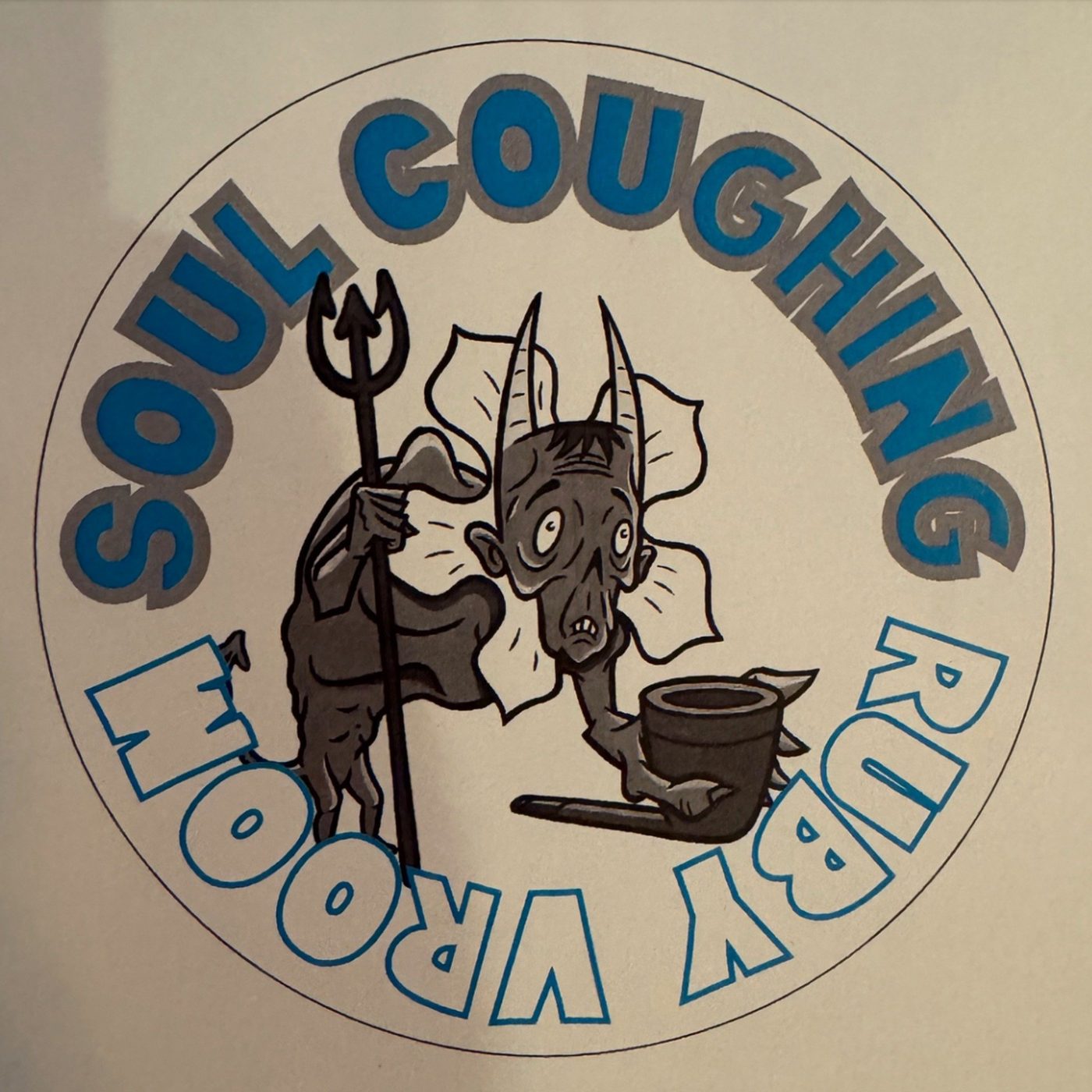
The package was art-directed by Kim Champagne, with illustration by Steve Wacksman, photography by Anthony Artiaga and band photos by Annalisa.7
Release and Reception
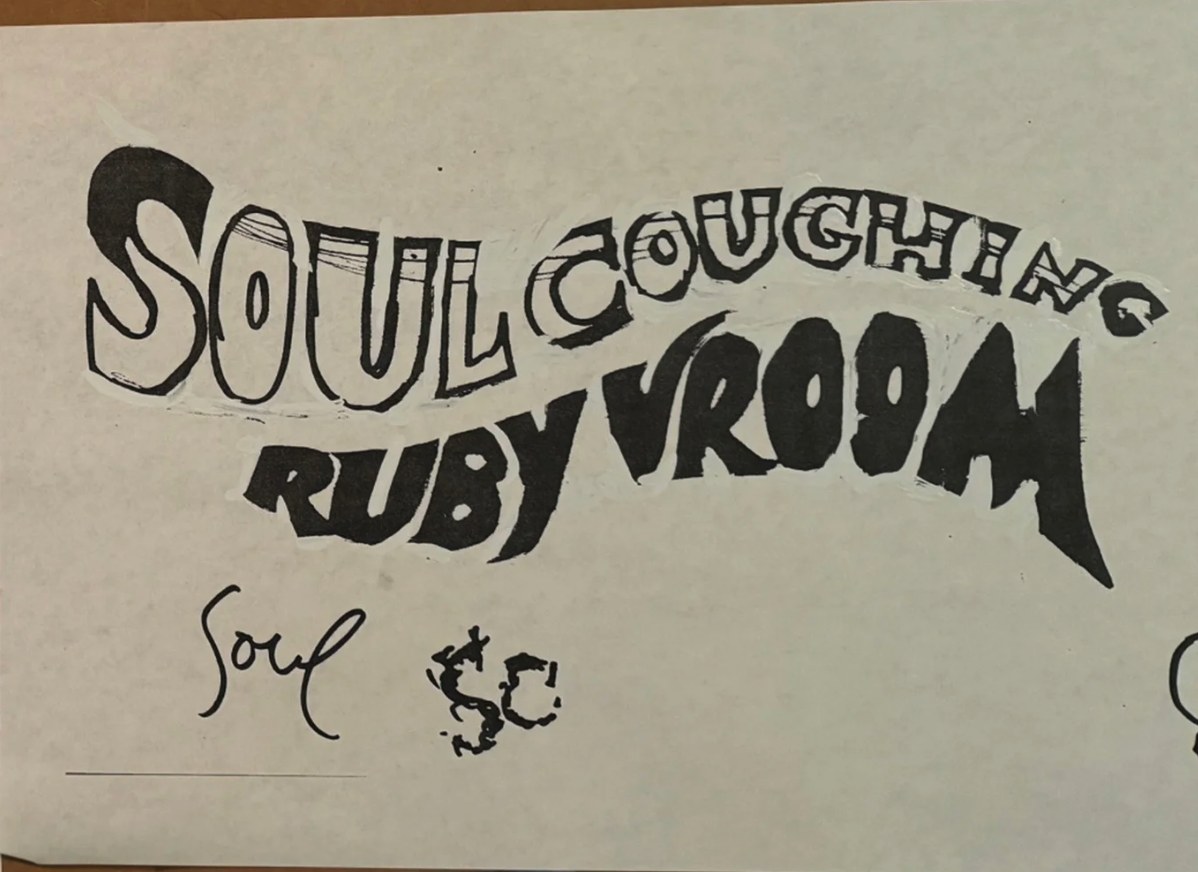
Doughty told the origin of "Down to This" on 120 Minutes in 1997. During a packed Meat Puppets show at the Knitting Factory, a photographer who sometimes covered the door while editing pictures took tickets while Doughty ran the guest list, with a Public Enemy track playing in the background. The back-and-forth, "you get the tickets and I'll get the list," was a little mantra to make the work less annoying, and it became the chorus.
The singles were "Down to This" (1994, video by Mark Kohr), "Sugar Free Jazz" (1995, also issued as a remix CD) and "Screenwriter's Blues" (1995, video by Jim McKay). None charted, but critics were enthusiastic. Entertainment Weekly gave it an A, Robert Christgau gave it an A, and Michael Azerrad's four-star Rolling Stone review credited degli Antoni with reinventing what a sampler could do as a rhythmic, harmonic and melodic instrument. AllMusic later called it one of the great debuts of the decade.12223
| Single | Year | US Alternative Peak | Video |
|---|---|---|---|
| "Down to This" | 1994 | Did not chart | Mark Kohr |
| "Sugar Free Jazz" | 1995 | Did not chart | None listed |
| "Screenwriter's Blues" | 1995 | Did not chart | Jim McKay |
Azerrad's review put them in a second wave of rap and rock, next to Beck and G. Love and Special Sauce, and argued they took it further, hearing everything from the O'Jays and William Burroughs to Benny Goodman's "Sing, Sing, Sing" in the mix.24 Christgau singled out the band's playing.25 Alternative Press joked that by the third listen you'd want five copies for your CD changer and then glue the tray shut, a line Slash was still printing on tour flyers the next spring. Looking back, AllMusic's Sean Westergaard called degli Antoni the band's secret weapon and said no sampler player in the decade since had come close.26 Low covered "Blueeyed Devil" in 1998.1623
Vibe, better known for hip hop and R&B, reviewed the record in October 1994. Suzanne McElfresh called Doughty "a rapper for the philosophical '90s," then added that Soul Coughing were really a groove band that worked in beats and rhymes, not a hip hop one. She singled out "Down to This," where a Toots and the Maytals riff, an Andrews Sisters snippet and Howlin' Wolf's "Smokestack Lightning" moan add up to "some kind of weird hoodoo."27
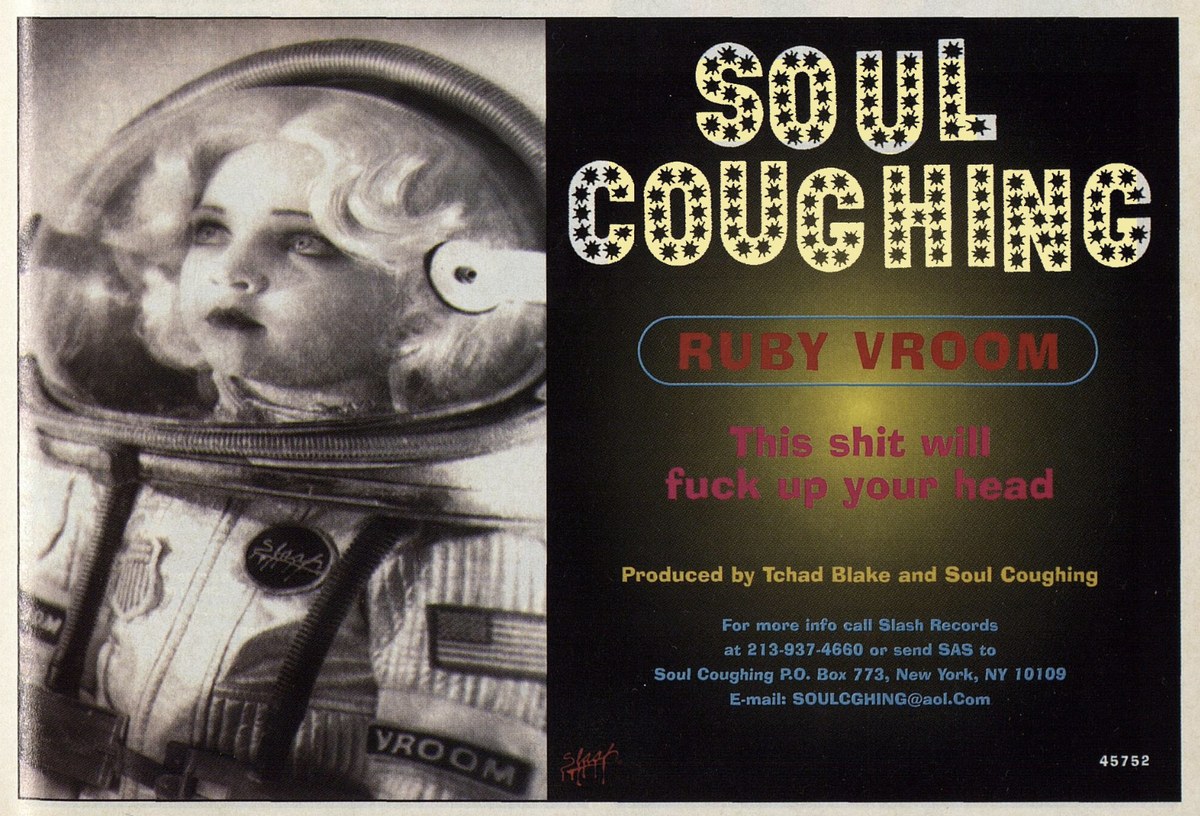
Slash's ads were out in force by then. Option ran a different one in September 1994, with a tag line that would not have worked in a Gap commercial: "This shit will fuck up your head." Fans were invited to write to a P.O. box in New York or email the band on AOL, at an address spelled SOULCGHING. Somebody at Slash had lost two letters on the way.28
Greg Kot caught them at Chicago's Lounge Ax in December 1994 and said a Soul Coughing set sounded like "several radio stations playing at once," with degli Antoni's effects supplying the seagulls, shortwave static and Andrews Sisters.29 A couple of months later he boiled it down to a dance party with a surprise every few minutes.30
The word spread on Usenet before radio caught up. On November 25, 1994, Hofstra student Dan Generosa posted a track-by-track rave to rec.music.reviews, opening with a groan about "another band with 'soul' in its name" before calling the record outstanding. "Is Chicago, Is Not Chicago" was "the first time i've danced around the room to poetry"; "Sugar Free Jazz" showed the band's "ability to make absolutely no sense lyrically but still sound amazing"; "Down to This" was "the Andrew Sisters meet Howlin' Wolf" and "must, must, MUST become a standard for dancehalls." He tagged "Blueeyed Devil" as the radio candidate ("so long as you don't mind references to the number of the beast"), found "Mr. Bitterness" misplaced, and signed off hoping the band would "make a whole lotta money and pay Ace of Base a couple mil to stop making records."1931
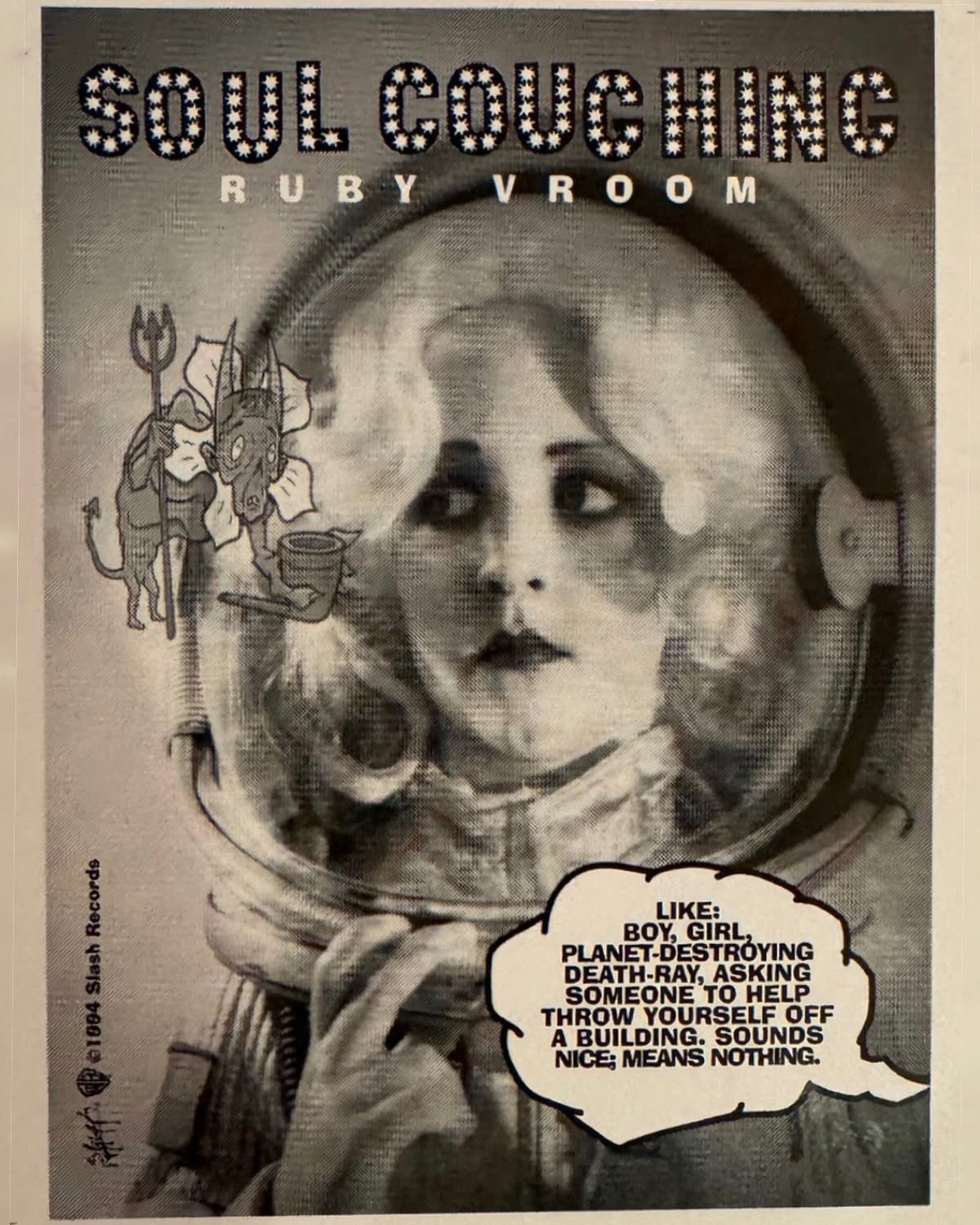
The ad's tag line came from Doughty's own description of his lyrics: words picked for how they sound, not what they mean.15
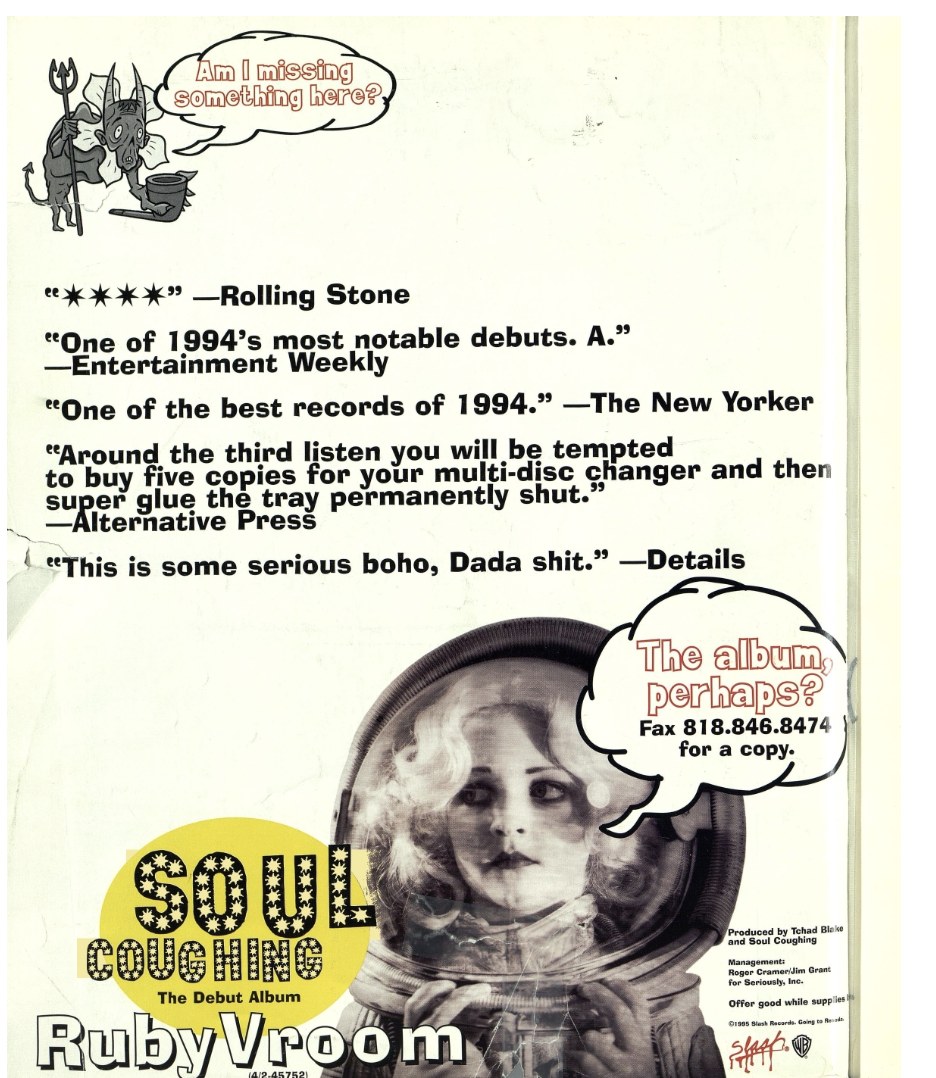
By February 1995 Slash was pitching the record to the trade. A full-page Billboard ad on February 25 lined up the reviews: four stars from Rolling Stone, an A from Entertainment Weekly, "one of the best records of 1994" from The New Yorker, "serious boho, Dada shit" from Details and the Alternative Press line about gluing the tray shut. A cartoon devil asks "Am I missing something here?" and a balloon over the cover girl answers, "The album, perhaps?" Even the devil wanted a copy. The fine print credits Tchad Blake and the band as producers and names Roger Cramer and Jim Grant of Seriously, Inc. as management.323313422
The phrase "Sugar Free Jazz" came from the Knitting Factory men's room wall, Doughty told StreetSound in 1995. Someone wrote "Free Jazz," someone added a drawing of Bert from Sesame Street behind bars captioned "Free Bert," someone else added "Free Drinks," and finally someone amended the first line to "Sugar Free Jazz." He admitted it was also a dig at the acid-jazz scene, which he and Gabay felt had found a formula and stopped searching. The 1995 Sugar Free Jazz promo EP carried the single plus two other mixes and a live remix of "Screenwriter's Blues," and Doughty said it was partly a stopgap while the second album was being finished.35
Sales were modest, and the number depends on who was counting. Phoenix New Times put it at about 85,000 in the US and 30,000 overseas in September 1995, Billboard reported roughly 70,000 by April 1996, and the 1998 label press bio claimed over 150,000. Nobody in the band pretended otherwise. Degli Antoni admitted the checks weren't fat, and when a Rolling Stone writer compared them to Talking Heads he waved it off: "We'll have to make four amazing records before we're the Nineties' Talking Heads."15 Doughty put it his own way: "We're not Green Day, but we're kind of kicking ass out there." He had started hearing the band on the radio while driving through Midwestern towns.936134
The album was never pressed on vinyl until Rhino's 180-gram reissue in 2015. A remastered 30th anniversary edition with era bonus tracks was announced on Jimmy Kimmel Live! in September 2024; the expanded track list includes "Buddha Rhubarb Butter," "Murder of Lawyers," "Amy Fisher," "Theme from Rachel's Sitcom" and the Mood Swing Mix of "Screenwriter's Blues."14
None of that was on anyone's mind in 1994. The band had a record out, a van waiting and a country full of rooms that had never heard of them.
On the Road
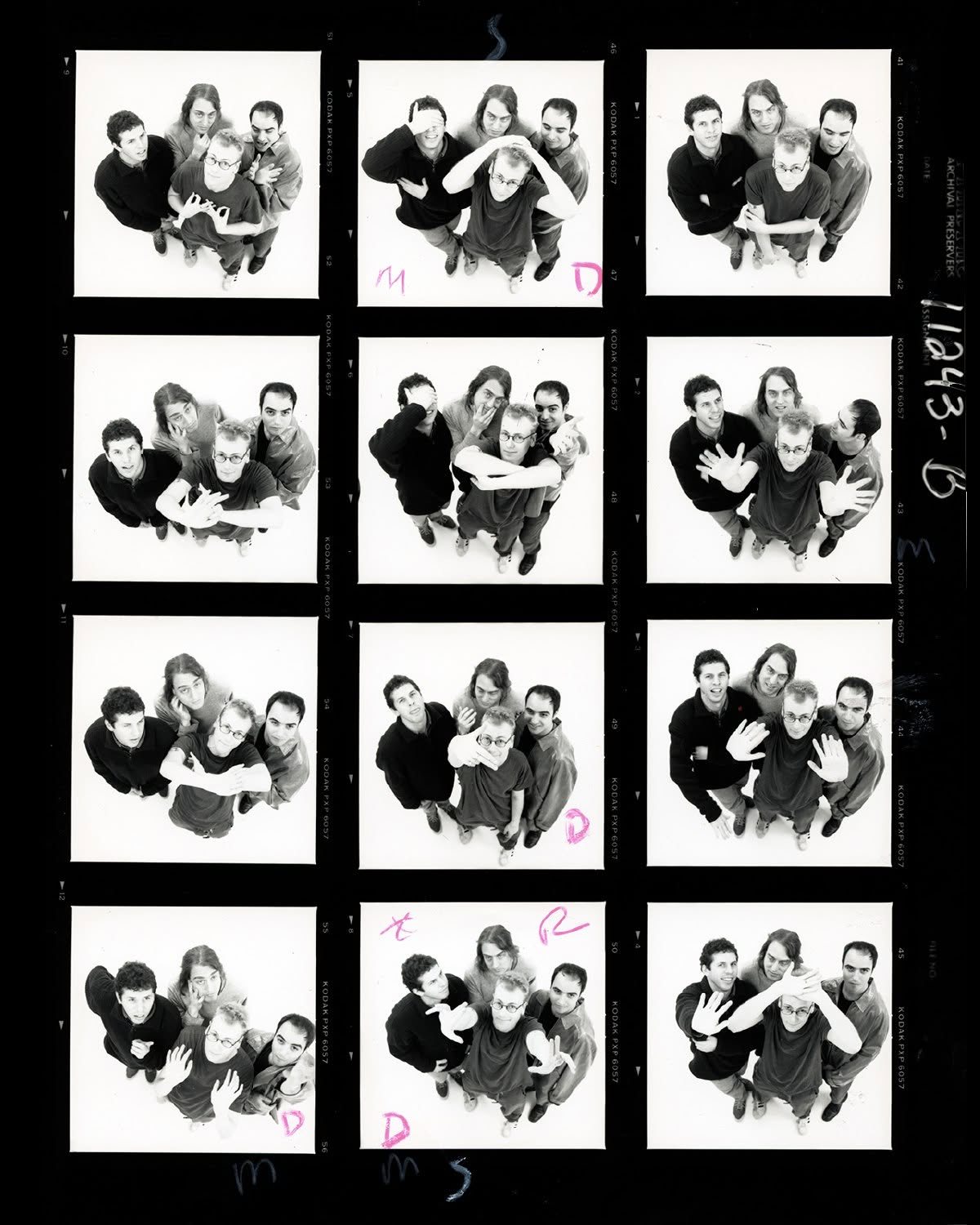
Soul Coughing became a touring band almost overnight. Gabay told the Houston Press in 1996 that until Ruby Vroom came out they had only ever played New York; within two years they were working rooms of 200, European festivals and 10,000-seat halls.8
Because Ruby Vroom sounded so studio-built, some critics assumed the band was a production project that couldn't play live. The Houston Press reported in 1996 that about 95 percent of it had in fact been cut live, all four playing at once, vocals included, and that Irresistible Bliss was made the same way.8
Who They Toured With
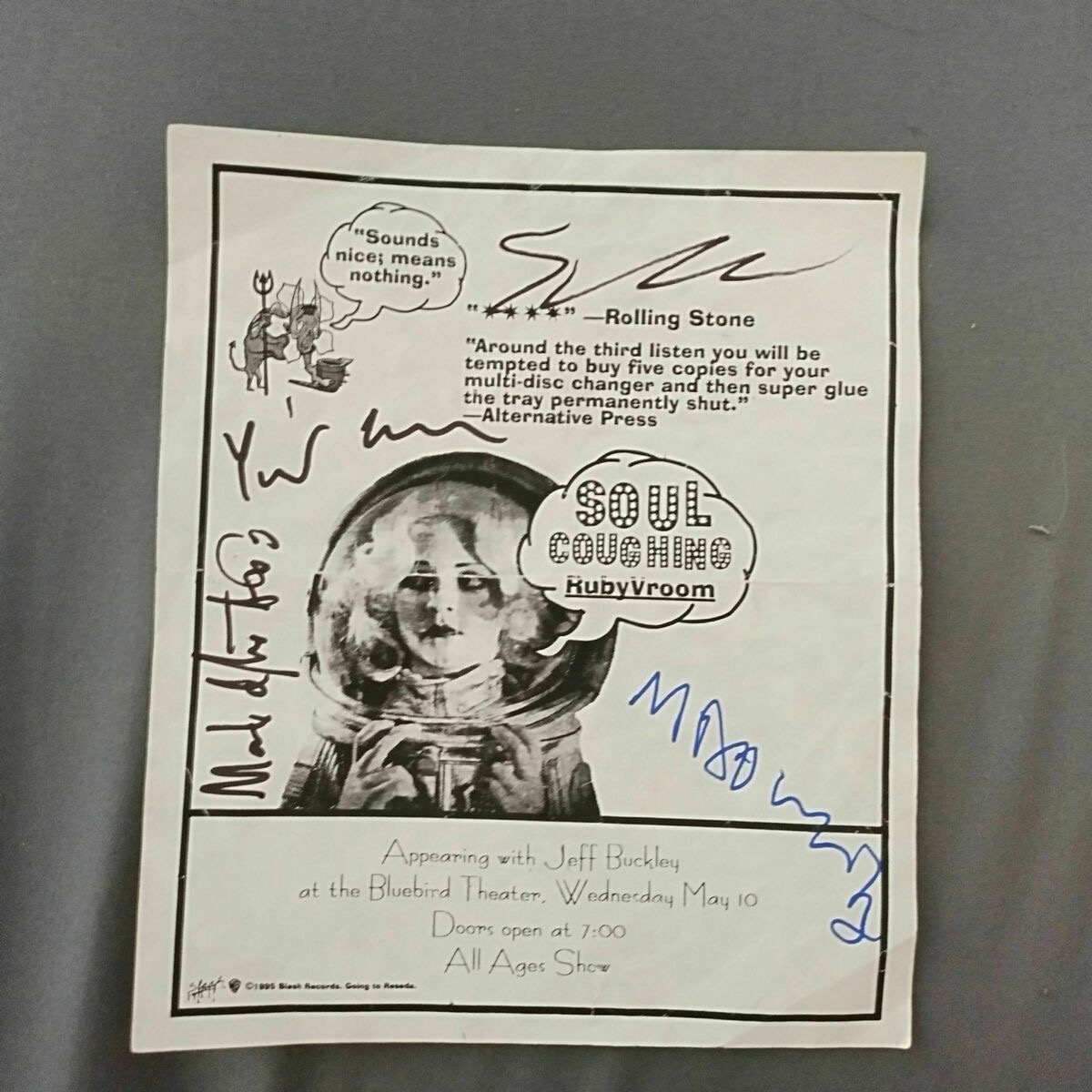
The El Oso press bio describes these years as backbreaking support tours with Jeff Buckley, Sunny Day Real Estate and Cop Shoot Cop. Other support slots included They Might Be Giants, Shudder to Think, Poster Children, Trans Am, Everclear, Geggy Tah, Los Amigos Invisibles, DJ Spooky and Lake Trout,20 and Contemporary Musicians adds Girls Against Boys. The Dave Matthews Band was the biggest booster: Matthews took them out on two US tours, including Madison Square Garden, and the bands shared European festival bills with the Violent Femmes. Doughty later called Matthews a longtime friend, and the connection eventually landed him on Matthews's ATO label.3637
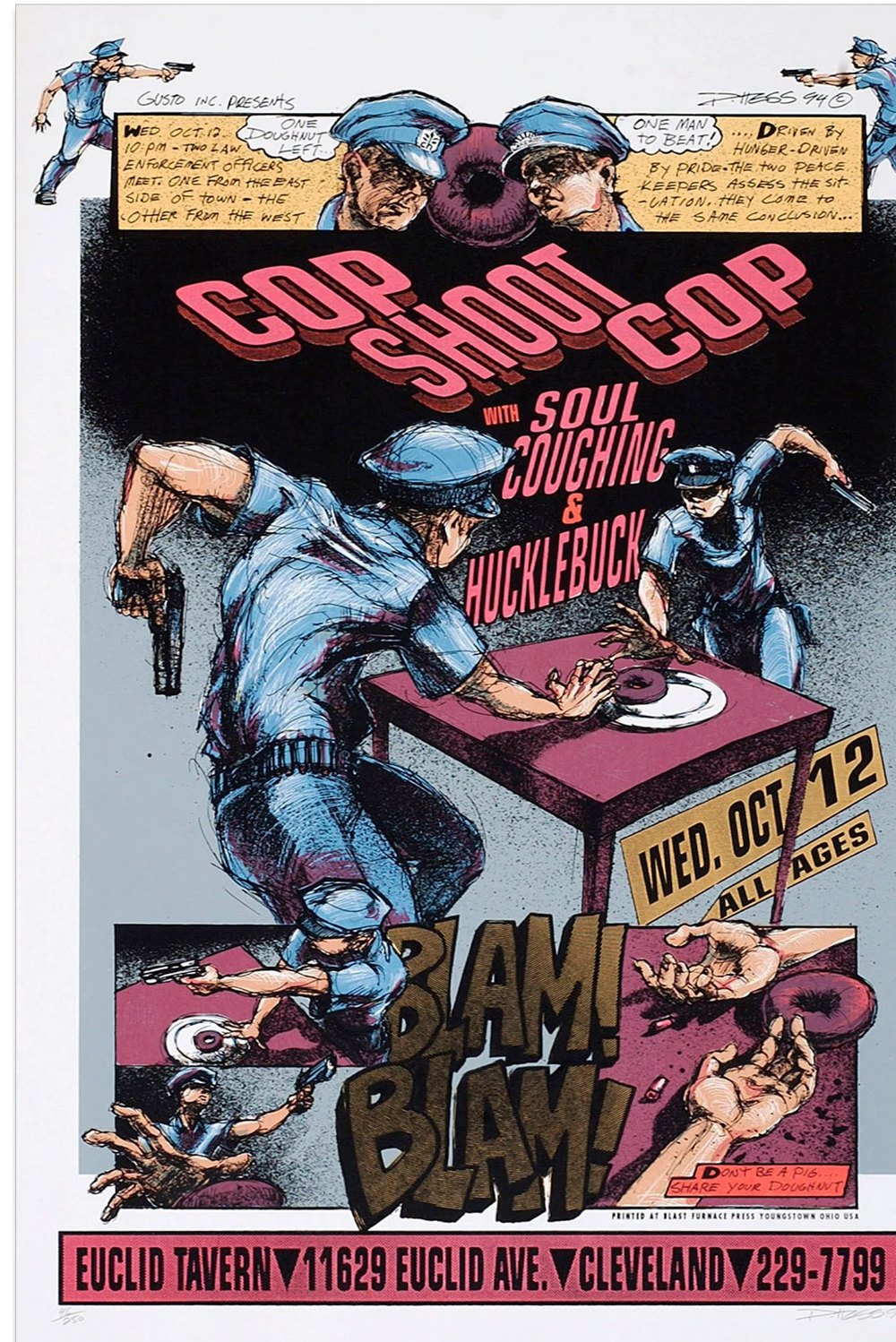
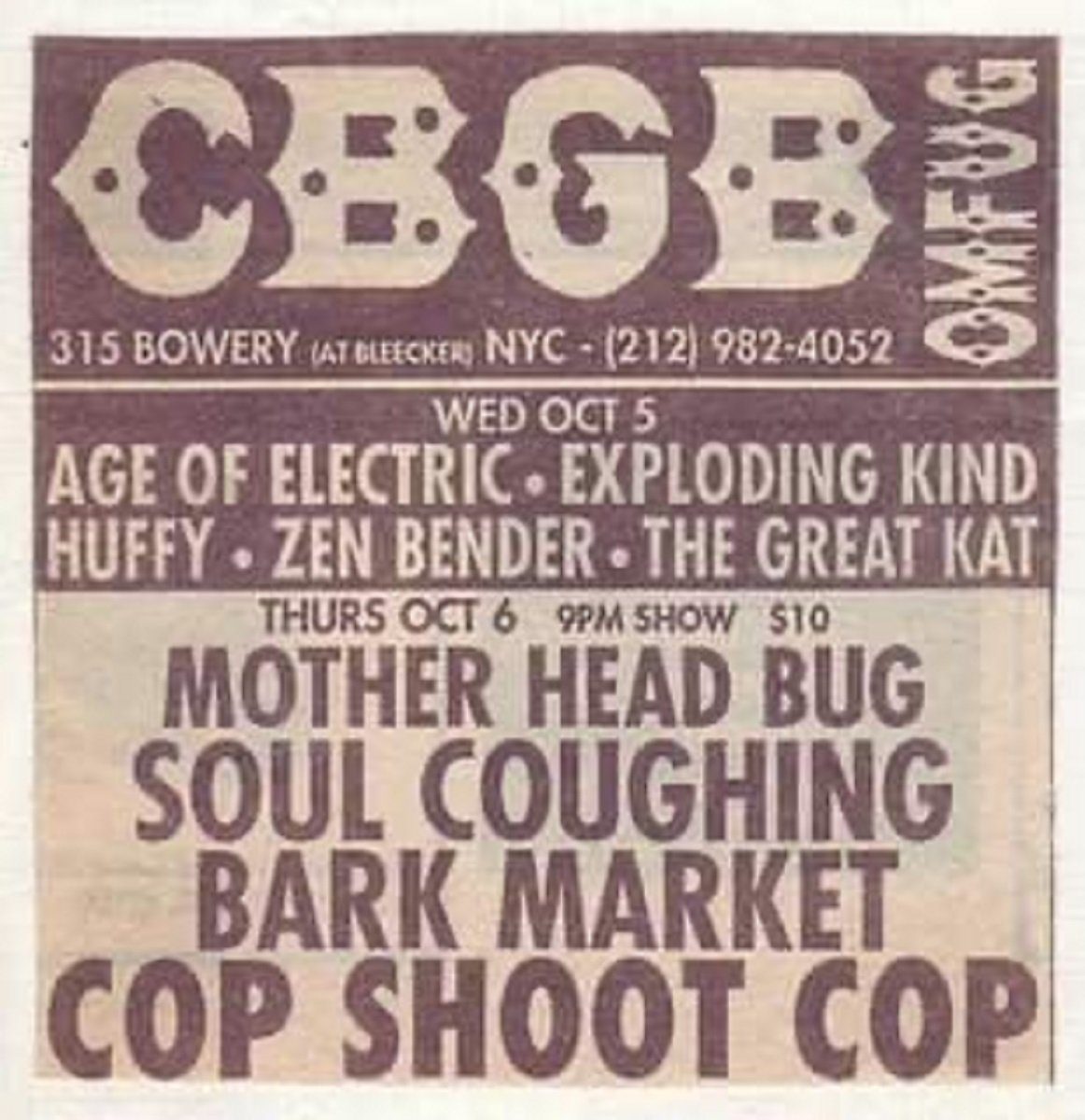
The band's first tour was opening for Cop Shoot Cop, whose singer Tod A. Doughty still called his personal hero in 1996, and the album credits thank them. By September 1995 they had already been to Europe four times that year, and the fall 1996 European run took in western France, Spain and Portugal. That fall's US tour featured Jeremy Enigk, formerly of Sunny Day Real Estate, with his orchestra. At Lollapalooza in 1996 their second-stage slot overlapped Rage Against the Machine, and Steinberg's verdict, relayed by Doughty, was that the revolution was cool but hard to play during. Steinberg thought it was funny that the Dave Matthews Band, "really sweet people," had become fans of a group whose first tour was opening for an industrial two-bass noise band from Brooklyn. Cop Shoot Cop's crowds turned out to be open-minded, he said, and every so often someone would sidle up at a show and mention, with a sly look, that they had been at one of those dates.38
Doughty's 1994 Tour Dispatches
In fall 1994 Doughty wrote a weekly tour diary for fans online, with degli Antoni supplying a downloadable sample to go with each one. Dispatch #1 (November 17, 1994, written in the van just past Katy, Texas) opens about a week into a run with Sunny Day Real Estate and Shudder to Think that curled through the South toward Austin, Los Angeles, San Francisco and Seattle. Doughty described the shows settling into a loose, roomy groove he credited to Southern humidity, and the sets were full of unrecorded songs: "Woolly Imbibe," a new one called "I Got Lost in the Parking Lot" (later known as "Don't Go Wreck the Car"; an archived soundboard from Boulder's Fox Theatre on November 13, 1996 lists it under both titles), and "Henry Rollins Has a Very Large Neck Indeed," played on a closed-circuit university cable channel in Atlanta. "White Girl" was new and played nightly; its bassline was something Steinberg had improvised during a video shoot a couple of months earlier while someone was powdering his face. This is also where the set-list bears first show up in print.39
The rest is van life. Tour manager Gus Brandt had been rechristened Roy, soundman Larry "Lars" Smith was the band's designated King of the Eighties, degli Antoni had been nicknamed "the Horsey," and Gabay was practicing a Texas accent that came out sounding like Boris Badenov. Steinberg and Gabay vanished to payphones at every stop. The van stereo ran on Cibo Matto, George Jones, the Latin Playboys, Exile on Main St., Prince's Come and degli Antoni's tape of the Hi-Lo's. Two years on, the tour bus had no CD player at all. Steinberg was the only one who'd brought cassettes, and his were too weird for anyone else, so old George Jones still got the most play ("George Jones is the soul singer," Steinberg said), and they blasted Back in Black every time they drove into or out of Detroit.38 A few months later Doughty assigned everyone a dwarf name: Grumpy for Steinberg, Horsey for degli Antoni, Spacey for himself, and for Gabay just Yuval, since you don't get much more dwarfish than that.40
Dispatch #2 (November 25, 1994, from a Days Inn in Portland) covers the drive west. At Emo's in Austin, Gabay sprained his ankle leaping offstage, which took "Mr. Bitterness" out of the set for a few nights. In Bryan, Texas, playing an old opera house to a room with plenty of cowboy hats, the band deliberately opened with a brand-new song, "Paint," later on Irresistible Bliss, and the crowd went with it anyway. After an eleven-hour desert drive and a locked club in Tucson, the show at the Downtown Performance Center (a DIY co-op that posted a sign asking the crowd not to dance, for insurance reasons) turned into Doughty's favorite of the tour. Sunny Day left the tour before California. In Los Angeles the band played two sets of mostly new material at a pajama party at A&R man Randy Kaye's house, including a live "Down to This" built only from its chants. San Francisco was degli Antoni's hometown, and the crowd was full of relatives. The dispatch also confirms the FAQ's rumor about soundman Lars Smith, who entertained Doughty in El Paso with stories of touring with Kix, the Maryland glam band, a natural connection for a Baltimore soundman.39
Dispatch #3 (posted December 21, 1994) picks the story up at the end of that run, after earlier dates with Cop Shoot Cop through Buffalo and Detroit. Sunny Day's Jeremy Enigk asked them to play "Sugar Free Jazz" at soundcheck. In Seattle the band did an on-air session at KCMU, where degli Antoni walked listeners through the samples in "Sugar Free Jazz," pointing out the Hong Kong street sounds and the escalator at Macy's. Doughty noted that some people heard them as a hip-hop band and others as a rock band, while the band didn't consider itself either.39
"Screenwriter's Blues" was getting real Seattle airplay, enough to sit at seven or eight on a commercial alternative countdown, and Doughty could tell which towns had heard the uncensored version by the crowd's reaction to its one profanity. When the DJ introduced them as a band from Los Angeles, Doughty had his friend stop the car, found a payphone and called the request line to correct him. The next day the band flew from Sea-Tac over the North Pole to London for their first European dates, and Doughty wrote that standing around the airport it was dawning on them that the band was turning into a kind of family.
Dispatch #4 (February 1995, written jet-lagged in Chicago) covers the turn of the year. A short East Coast run through Boston, D.C., New York and Philadelphia was the first time whole crowds knew the words; Doughty said it took him four songs to realize the hiss in his monitor was the audience singing. He named the moments that now set rooms off: the jazz section at the end of "Bus to Beelzebub," the switch from the freestyle into the fade of "True Dreams of Wichita," and the bass breaks in "Blueeyed Devil." Gus Brandt left for a stint tuning guitars for Belly in Australia (he was back as tour manager for the Irresistible Bliss run).39
Then came the first proper European tour, a much longer route than the gigography shows: Denmark (Copenhagen, Aarhus, where kids kept yelling for "Janine," which the band never played live because it would mean touring an answering machine, and a near-empty show in Sonderborg that became a loose, tangent-filled favorite), a sold-out night at the Loft in Berlin (about 800 people, who sat through it in near silence and then came up afterward to say it was brilliant; Doughty figured European crowds just run more sedate),11 Amsterdam, Antwerp, Paris with their French label Barclay, Zurich, and then Italy, where in Cesena a kid in the front row lip-synced "Blow My Only," learned from a widely traded bootleg of their Amsterdam radio session. In France, Doughty found journalists treated them as Important, quizzing him on references and on supposed links to Frank Zappa and Morphine; he said he'd never listened to Zappa. The van ran on Portishead's Dummy several times a day. New in the set were "Lemon Lime" and "I Got Lost in the Parking Lot," alongside unrecorded staples "Blow My Only," "Laff On, Fatboy," "Collapse, Unload It," "Woolly Imbibe" and "White Girl."
Le Monde covered the Paris date, Sunday, February 5, 1995, at the Érotika, a rock club in Pigalle. Stéphane Davet reported that the curious, intrigued by the band's recent triumph at the Transmusicales de Rennes, filled the room without trouble. He called the four "song sculptors" more than songwriters, praised Steinberg and Gabay's rhythm section for precision and intensity, and noted that Gabay saved his movements behind a minimal kit. Doughty's slight blond frame, he wrote, gave no warning of the stage presence he turned out to have.41
From Milan they flew straight to Minneapolis for an over-21 show the band hated on principle. Doughty opened with a speech against age restrictions, spent the set pulling crushed fans out from against the stage, and the crowd kept knocking over monitors and shoving degli Antoni's keyboard out from under him. Back in the US, the reception was suddenly that big.
The dispatches are personal as well as logistical. Doughty confirmed to fans in Dispatch #3 that his girlfriend was the poet Maggie Estep; they had started seeing each other while Soul Coughing toured with Cop Shoot Cop and she was on the road with her band opening for Hole, and Gus would drive him from Buffalo to Rochester to see her. She flew in to meet him in San Francisco in November 1994 and in Chicago in February 1995, and he closed Dispatch #4 recalling that the first thing she ever said to him was to ask whether he was the Soul Coughing guy. By the September 1995 SonicNet chat he said they had split that spring. He also used the dispatches to publish poems written in the van, "Butter/Lost" (somewhere between Fredericksburg and Chapel Hill) and "From a Gas Station Outside Providence."1839
Other snapshots: Shudder to Think's stage manager, nicknamed Angry Dave, calmly stage-diving mid-set in Portland; Dave Grohl wandering backstage in Seattle, where Gus greeted him as "Nirvana Boy"; Sunny Day drummer William Goldsmith writing his address in Doughty's book with bloodied hands after the final night; a near-empty show in Sonderborg, Denmark, after which Doughty went to a karaoke bar with a local teenager and her mother while her weeping boyfriend trailed them through town until the police drove by; and Barclay's Stéphane Vérité taking the band to a Paris bar where a woman in a cowboy hat and holsters sold tequila shots with a war whoop. Doughty, who didn't drink, found that one especially funny.
On the road they were deep into unrecorded material. In September 1995 Doughty said they played maybe ten songs beyond Ruby Vroom regularly and another ten occasionally, and degli Antoni stressed that he changed his samples on the fly every night. They worked in covers too, including Black Sabbath's "War Pigs" and, debuted in fragments in Lyon in 1996, Tommy Tutone's "867-5309/Jenny." Early TV included a 1995 appearance on The Jon Stewart Show, which Doughty said left him so nervous he threw a tantrum, and the "Down to This" video drew a split decision on Beavis and Butt-Head: Beavis yes, Butt-Head no.
A Harvard Crimson review of the Paradise show on April 19, 1995 catches the set at that point: "Bus to Beelzebub" to open, about five new songs mixed in with the album, a bit of the Beatles' "A Day in the Life" on the end of "True Dreams of Wichita," a "War Pigs" tease inside the closing "Down to This," and "Screenwriter's Blues" for the encore. When somebody yelled for "Janine," Doughty answered, "Janine's not here right now." The reviewer was struck that the crowd actually danced.4243
Guests who sat in over the years included Dave Matthews, John Popper, Redman, clarinetist David Krakauer, John Zorn, Anthony Coleman, Elliott Smith, Casual and Priest.20
By spring 1995 the online routine had a Warner Bros. wrapper around it. On May 1, 1995 the band was the guest on Warner's weekly AOL chat, "Cyber-Talk," and hosted it from backstage at The Backdoor in San Diego before going on with Jeff Buckley. Warner's announcement noted that Doughty's tour diary was also posted on CompuServe and the Internet, that fans could download an interactive press kit, and that the band answered fan e-mail from the road.4445
By the fall of 1995 the record was a year old and had sold modestly, which the band was the first to admit. What it had done was put four guys who used to play only New York on the road, and the rooms had started to catch up. Whole crowds in Boston, D.C. and Philadelphia knew the words. They had been to Europe four times that year. They were playing about ten songs the record didn't have, and degli Antoni was changing his samples every night. By the end of October they were at the Power Station in New York with David Kahne, making the second record.
-
Sebastian Steinberg interview, The Michigan Daily, March 13, 1995. ↩︎↩︎
-
Tchad Blake, interview with Chris Douridas, Morning Becomes Eclectic, KCRW, July 14, 1994. ↩︎↩︎
-
Wikipedia. ↩︎
-
Tchad Blake, Q&A on Gearspace (2007, reposted 2022). ↩︎↩︎
-
David Goggin, "Engineer/Producer Tchad Blake," Mix, February 1, 2005. ↩︎
-
Ruby Vroom CD credits, Slash/Warner Bros. 9 45752-2, 1994. ↩︎↩︎
-
"Soul Men," Houston Press, July 1996. ↩︎↩︎↩︎
-
Feature on Soul Coughing, Ray Gun, December 1994. ↩︎
-
Peter Howell, "Acid jazz, hip-hop & arcane references to Saskatoon," Toronto Star, March 9, 1995, p. H3. ↩︎↩︎
-
Margit Detweiler, "20 Questions: Sebastian Steinberg of Soul Coughing," Philadelphia City Paper, July 4, 1996. ↩︎
-
Band photo, Option, September 1994. ↩︎
-
Ruby Vroom 30th anniversary edition, Round Hill Records, 2024 to 2025; Record Store Day. ↩︎↩︎
-
"Slacker's Cough: Soul Coughing Gets Ill With Hip-Hop for Hepcats," Phoenix New Times, September 1995. ↩︎↩︎↩︎
-
WhoSampled, Ruby Vroom samples and covers. ↩︎↩︎
-
Mark degli Antoni, interview with SCUG, 1996. ↩︎
-
SonicNet chat with Doughty and degli Antoni, September 12, 1995, and SonicNet show coverage. ↩︎↩︎
-
alt.music.soulcoughing newsgroup, 1996 to 2013, via UsenetArchives.com. ↩︎↩︎
-
Mike Doughty (@Mike_Doughty_) on Twitter, June 27, 2016. ↩︎
-
Michael Azerrad, Ruby Vroom review, Rolling Stone, December 15, 1994, via Rock's Backpages. ↩︎
-
Robert Christgau, Consumer Guide. ↩︎
-
Sean Westergaard, Ruby Vroom review, AllMusic. ↩︎
-
Suzanne McElfresh, review of Ruby Vroom, Vibe, October 1, 1994, p. 119. ↩︎
-
Slash Records ad for Ruby Vroom, Option, September 1994, p. 105. ↩︎
-
Greg Kot, "3 Bands Let Lounge Ax See Future," Chicago Tribune, December 12, 1994, p. D16. ↩︎
-
Greg Kot, "Defying Categorization," Chicago Tribune, February 17, 1995. ↩︎
-
Dan Generosa, Ruby Vroom review, rec.music.reviews, November 25, 1994. ↩︎
-
Slash Records ad for Ruby Vroom, Billboard, February 25, 1995. ↩︎
-
Doughty interview, Details magazine. ↩︎
-
StreetSound interview with Doughty and Gabay, 1995. ↩︎
-
Soul Coughing, El Oso press biography, Slash/Warner Bros., 1998. ↩︎↩︎
-
"Soul Coughing," Contemporary Musicians, Gale, c. 1998, via Encyclopedia.com. ↩︎
-
Sebastian Steinberg, phone interview, October 22, 1996, WILMA (page updated November 11, 1996). ↩︎↩︎
-
M. Doughty, tour Dispatches #1 to #4, AOL, November 1994 to February 1995. ↩︎↩︎↩︎↩︎↩︎
-
Opus Moreschi, email interview with M. Doughty, spring 1995, for "The Original Alterna-Hip-Hop-Jazz-Rock-Funk-Indie-Dada-Beat Poetry Group," The Correspondent (Capital Community-Technical College), vol. 12 no. 1, October 1995; full answers posted on The 5% Nation. ↩︎
-
Stéphane Davet, "Soul Coughing, sculpteur de chansons," Le Monde, February 7, 1995, p. 29 (translated from the French). ↩︎
-
"'Coughing' Up a Hip Storm," The Harvard Crimson, April 27, 1995. ↩︎
-
Paradise Rock Club review, The Harvard Crimson, October 24, 1996. ↩︎
-
PR Newswire, "Soul Coughing to Guest on Cyber-Talk May 1," April 26, 1995. ↩︎
-
Warner Bros. Cyber-Talk with Doughty, Lyon, September 16, 1996. ↩︎